
What's Happening?
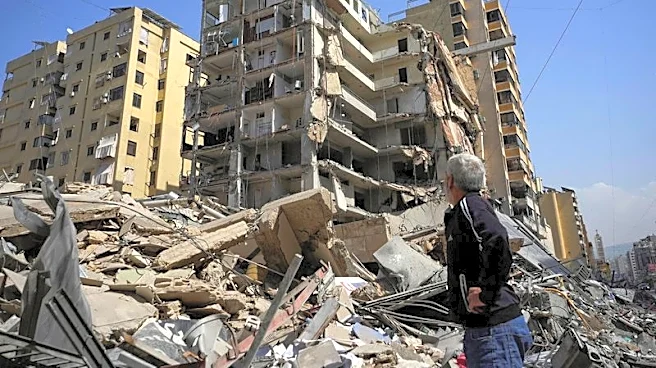
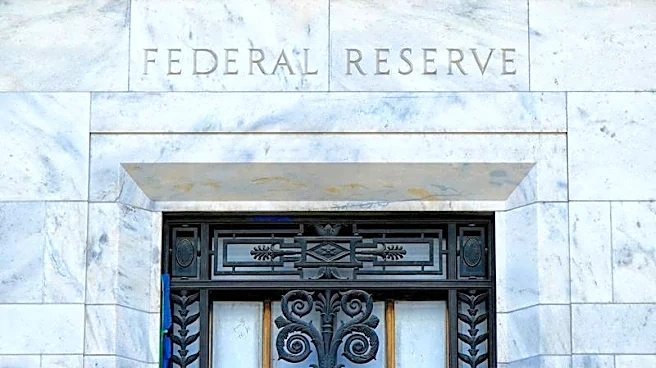
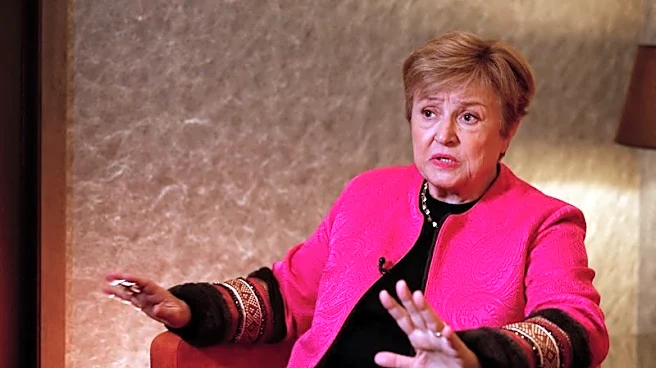
Kristalina Georgieva, Managing Director of the International Monetary Fund (IMF), has advised central banks to carefully balance their monetary policies in light of the ongoing war in the Middle East,
which has caused significant disruptions in global oil supply and increased energy prices. Speaking ahead of the IMF and World Bank annual meetings, Georgieva emphasized the need for central banks to avoid premature tightening of monetary policies, which could stifle economic growth. She highlighted the importance of monitoring inflationary pressures and demand softening, suggesting that if the ceasefire in the Iran conflict holds, central banks might maintain steady interest rates with only a slight rise in inflation. Georgieva also cautioned against deficit-financed stimulus measures, which could complicate monetary policy efforts.
Why It's Important?
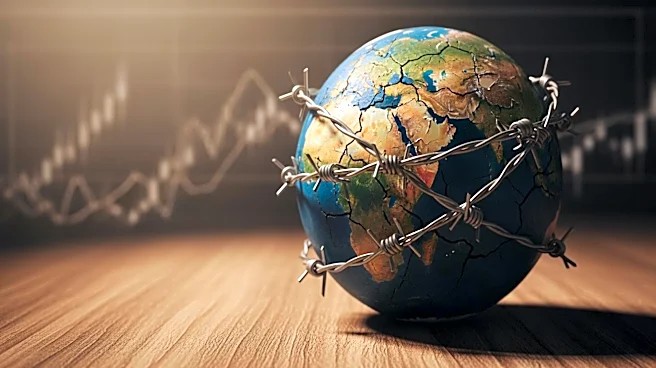
The guidance from the IMF is crucial as it comes at a time when global economies are grappling with the dual challenges of inflation and potential economic slowdown due to geopolitical tensions. The war in the Middle East has already led to a 50% increase in oil prices, impacting global markets and consumer prices. Central banks are under pressure to manage inflation without hindering economic recovery. Georgieva's remarks underscore the delicate balance policymakers must strike to avoid exacerbating economic instability. Her warning against deficit-financed stimulus highlights the potential risks of increasing fiscal burdens, which could lead to conflicting policy directions and hinder economic recovery efforts.
What's Next?
Central banks are expected to closely monitor economic indicators and adjust their policies accordingly. The outcome of the Iran conflict and its impact on oil prices will be pivotal in shaping future monetary policy decisions. Policymakers will need to remain vigilant to avoid premature rate hikes that could dampen growth. The IMF's upcoming meetings will likely address these challenges, providing further guidance on navigating the current economic landscape. Additionally, countries may need to craft temporary fiscal support measures to mitigate the impact of the conflict while ensuring long-term economic stability.