





What's Happening?
The United States government has authorized the sale of nearly $2.1 billion worth of Advanced Precision Kill Weapon System (APKWS) munitions to three Middle Eastern countries, citing an emergency that necessitates bypassing the usual 30-day congressional
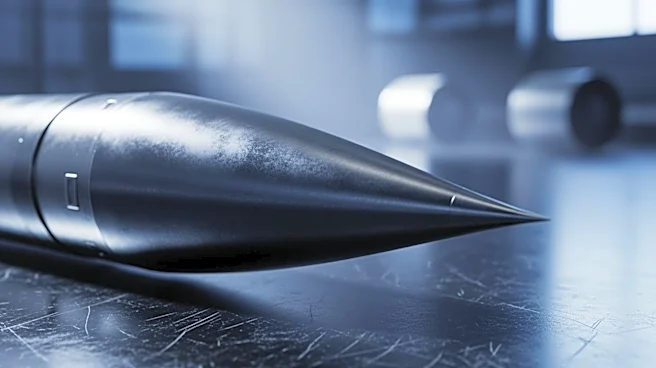
notification period. The sales include potential deals with Israel and Qatar, each valued at $992.4 million, for 10,000 APKWS-II rounds and related equipment. Additionally, the United Arab Emirates is set to receive 1,500 APKWS-II guidance sections and supporting hardware for $147.6 million. These transactions are part of a broader set of military sales, including a $4 billion Patriot missile replenishment for Qatar and a $2.5 billion sale of Northrop Grumman’s Integrated Battle Command System to Kuwait. The APKWS, produced by BAE Systems, transforms standard rockets into laser-guided munitions, offering a cost-effective solution for combating low-cost drones.
Why It's Important?
This development underscores the strategic military relationships between the United States and its Middle Eastern allies, particularly in the context of regional security concerns. The expedited sales process highlights the urgency perceived by the U.S. government in addressing threats, such as those posed by low-cost drones, which have become increasingly prevalent in the region. The transactions also reflect the ongoing demand for advanced military technology and the U.S.'s role as a key supplier. For the defense industry, these sales represent significant business opportunities, while for the recipient countries, they enhance military capabilities and deterrence against regional adversaries.
What's Next?
The immediate next steps involve the finalization of these sales agreements and the subsequent delivery of the munitions and systems to the respective countries. The U.S. State Department's decision to waive the congressional notification period may prompt discussions or reactions from lawmakers concerned about oversight and the implications of such emergency powers. Additionally, the recipient countries will likely integrate these systems into their existing military frameworks, potentially altering regional military dynamics. Observers will be watching for any geopolitical shifts or responses from neighboring countries, particularly those that may feel threatened by the enhanced capabilities of U.S. allies.