





What's Happening?
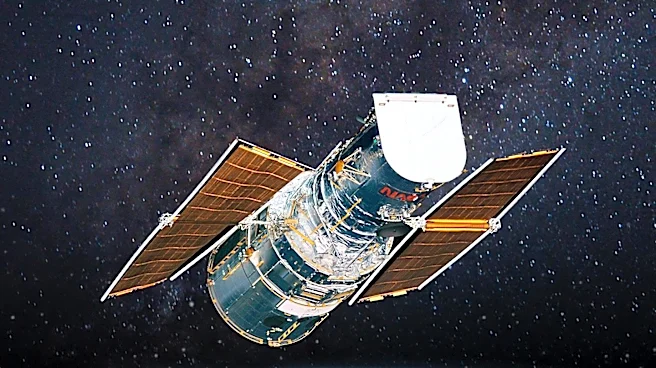
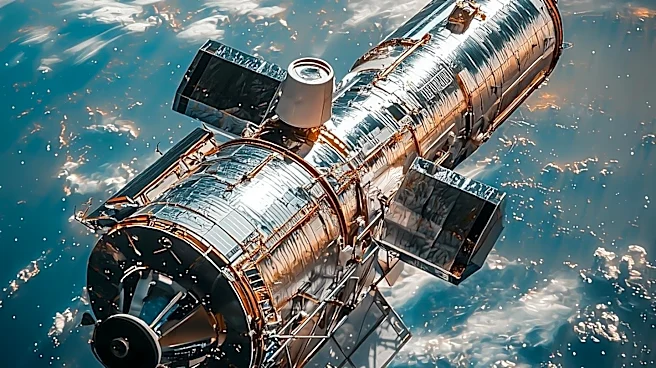
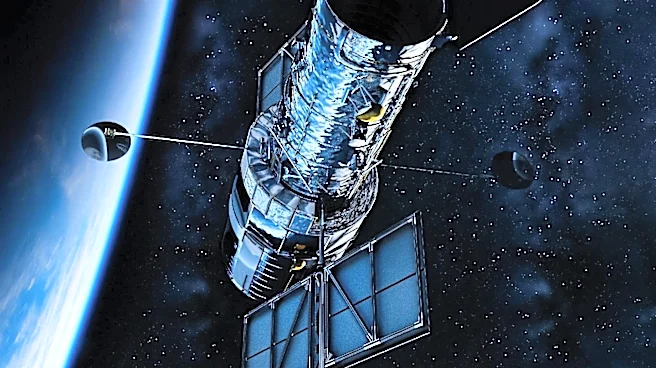
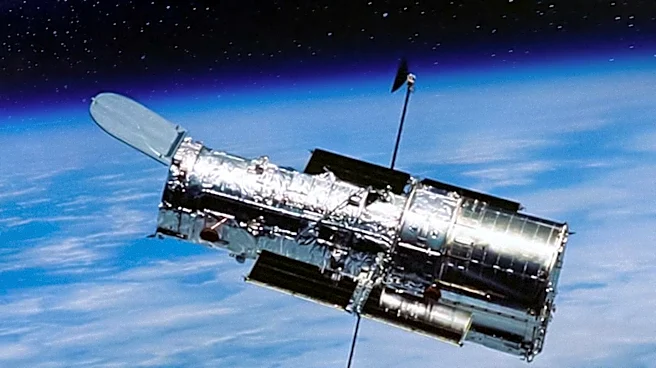
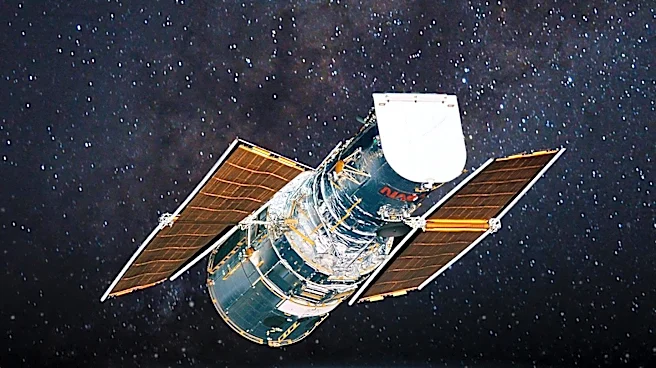
NASA has issued a Request for Information (RFI) to solicit proposals from commercial industries regarding potential in-space servicing options for the Hubble Space Telescope. The RFI aims to assess capabilities that could extend Hubble's operational life,
which is currently anticipated to end with an uncontrolled re-entry between 2033 and 2034 due to atmospheric drag. The RFI invites companies to express interest in three key activities: boosting Hubble to a higher orbit to prolong its scientific mission, servicing the telescope to enhance its capabilities, or safely disposing of it through a controlled atmospheric re-entry or orbital disposal. NASA Administrator Jared Isaacman emphasized the importance of exploring cost-effective ways to extend the life of this valuable asset. The RFI will remain open for industry responses until November 30.
Why It's Important?
The Hubble Space Telescope is a national icon that has profoundly influenced humanity's understanding of the universe for over 35 years. Extending its operational life would allow for continued groundbreaking scientific discoveries and provide more opportunities to expand astronomical knowledge. This initiative reflects a growing trend in space exploration where commercial industry capabilities are being leveraged for complex missions, potentially offering innovative and cost-effective solutions compared to traditional government-led approaches. The success of such a mission would not only benefit scientific research but also demonstrate the viability of in-space servicing technologies, which are crucial for the long-term sustainability of orbital assets. Conversely, failure to find a viable solution would mean the premature loss of a highly productive scientific instrument, impacting ongoing research and future observational campaigns.
What's Next?
Following the RFI's closing on November 30, NASA will evaluate the submitted proposals from commercial industries. The agency anticipates that any mission to extend Hubble's life would need to launch by 2032 to be effective, given the projected re-entry timeframe. This evaluation will determine the feasibility and cost-effectiveness of commercial solutions for orbital boosting, servicing, or controlled deorbiting. The insights gained from this RFI will inform NASA's strategy for managing its aging space assets and could lead to partnerships with private companies for future space missions. The outcome will also influence the planning for the 'flagship mission to follow' Hubble, as mentioned by Nicky Fox, Associate Administrator, Science Mission Directorate, NASA Headquarters, ensuring continuity in deep space observation.
Beyond the Headlines
This RFI signifies a pivotal moment in how NASA approaches the lifecycle management of its space assets, moving towards greater reliance on commercial innovation for in-space operations. It highlights the rapid advancements in commercial space capabilities, particularly in satellite capture and servicing. The ethical and practical considerations of extending the life of an aging, iconic telescope versus investing in new technologies are also at play. Furthermore, the decision to explore commercial options for Hubble could set a precedent for future collaborations between government space agencies and private companies, fostering a more dynamic and competitive space industry. This approach could lead to more efficient resource allocation and accelerate technological development in areas like orbital maintenance, debris mitigation, and sustainable space operations.