





What's Happening?
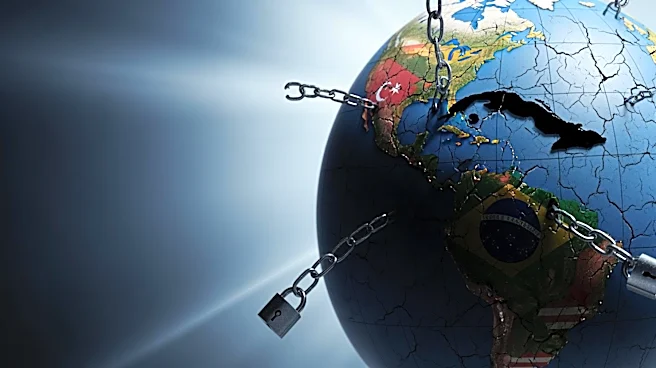
The United States has intensified its enforcement actions in Latin America, focusing on criminal organizations and hostile regimes. Recent measures include the designation of two major Brazilian criminal organizations, Comando Vermelho (CV) and Primeiro
Comando da Capital (PCC), as Foreign Terrorist Organizations (FTOs) and Specially Designated Global Terrorists (SDGTs). Additionally, new sanctions have been imposed on Cuba's military-controlled conglomerate, Grupo de Administración Empresarial S.A. (GAESA), and its foreign business partners. These actions, effective June 5, 2026, aim to address national security threats in the region and prevent US companies from engaging in prohibited transactions.
Why It's Important?
The designation of Brazilian criminal organizations and the imposition of sanctions on Cuba reflect the US administration's commitment to combating transnational crime and isolating hostile regimes. These measures have significant implications for US and multinational businesses operating in Latin America, particularly in sectors such as financial services, energy, and commodities distribution. Companies must enhance their due diligence processes to avoid inadvertently engaging with designated entities, as failure to comply could result in criminal and civil liability. The sanctions on Cuba's GAESA conglomerate further complicate commercial activities in Cuba, with potential secondary sanctions affecting foreign entities that engage in transactions with designated Cuban entities.
What's Next?
Businesses operating in Latin America will need to reassess their compliance strategies and conduct thorough due diligence to mitigate risks associated with the new designations and sanctions. The US government may continue to expand its enforcement actions, targeting additional organizations and sectors linked to criminal activities and hostile regimes. Companies must stay informed of regulatory changes and adapt their operations accordingly to ensure compliance and avoid penalties. The administration's focus on Latin America suggests ongoing scrutiny and potential future actions to address security threats in the region.