

What's Happening?
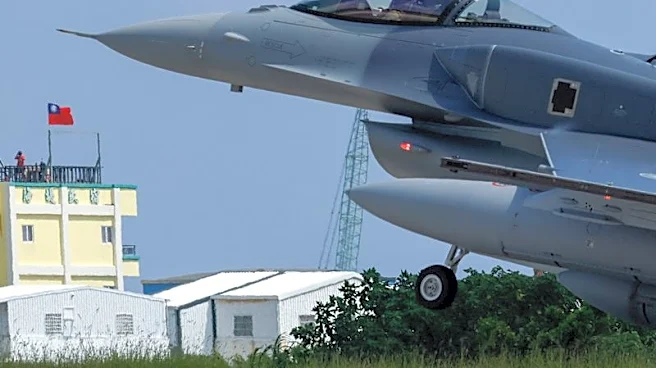
On May 5, 2016, a student pilot flying an Arizona Air National Guard F-16 experienced G-induced Loss of Consciousness (G-LOC) during a high-G maneuver over the southwestern United States. The pilot, identified as 'Ocho,' pulled more than 8 Gs, leading
to an immediate loss of consciousness without typical warning signs like tunnel vision or greying out. The F-16 subsequently nosed over from approximately 17,000 feet and began to plunge. His instructor, Maj. Luke O’Sullivan of the 152nd Fighter Squadron, repeatedly called for recovery. While the pilot remained unconscious, the aircraft's Automatic Ground Collision Avoidance System (Auto-GCAS) activated, rolling the jet upright and initiating a 5 G pull. The system successfully recovered the F-16 from under 4,400 feet, preventing a crash. This incident marked the fourth confirmed save by Auto-GCAS, a technology developed over nearly three decades by the Air Force Research Laboratory (AFRL), NASA, and Lockheed Martin.
Why It's Important?
This incident highlights the critical role of advanced safety systems like Auto-GCAS in modern military aviation, particularly in mitigating the risks associated with G-LOC. G-LOC has historically been a significant cause of aircraft accidents and pilot fatalities, with 29 F-16 crashes attributed to it between 1982 and 2001. The successful intervention of Auto-GCAS demonstrates its effectiveness in preventing catastrophic outcomes when pilots become incapacitated. The system's ability to take control and recover an aircraft autonomously not only saves lives but also preserves valuable military assets. The development and deployment of such technology underscore a shift in aviation safety, where the aircraft itself is equipped to compensate for human physiological limitations, thereby enhancing operational safety and pilot survivability in high-stress flight environments. This technology is particularly vital for single-crew sorties where no immediate human intervention is possible.
What's Next?
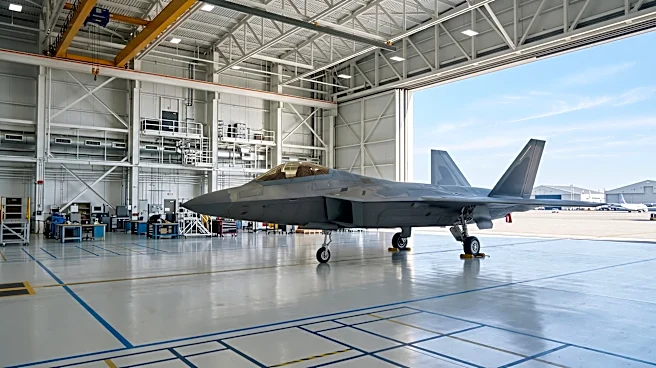
The continued integration and expansion of Auto-GCAS across military aircraft fleets are expected. The F-16 program began retrofitting Block 40/50 jets with the system in September 2014, and by 2016, over 600 Air Force F-16s were equipped. The F-35A received Auto-GCAS in July 2019, seven years ahead of schedule, and a 'line in the sky' version was test-flown on the F-22 in 2013. While coverage is not yet universal, the U.S. Navy plans to begin fitting the system to F/A-18E/F Super Hornets in 2027 and EA-18G Growlers in 2028. Ongoing efforts will likely focus on further refining the system, ensuring its reliability, and expanding its application to other aircraft types. The success of Auto-GCAS also suggests potential for similar autonomous safety features in other complex and high-risk operational domains, both military and civilian.
Beyond the Headlines
The successful deployment of Auto-GCAS raises broader questions about the evolving relationship between human pilots and autonomous systems in critical operations. While the system acts as a last resort, it signifies a growing reliance on artificial intelligence and automated controls to override human error or physiological limitations. This trend could lead to discussions about pilot training methodologies, potentially shifting focus from solely preventing G-LOC to also understanding and trusting automated recovery systems. Furthermore, the technology's success could influence the design and safety protocols of future aircraft, potentially leading to more integrated autonomous safety features from the outset. The ethical implications of machines making life-or-death decisions in aviation, even in emergency scenarios, will also likely continue to be a subject of debate as these systems become more prevalent.