





What's Happening?
The Ogallala Aquifer, a critical water source for the southern High Plains, is experiencing a significant decline in irrigation capacity. This reduction is compelling farmers in the region to make increasingly challenging economic decisions, even before
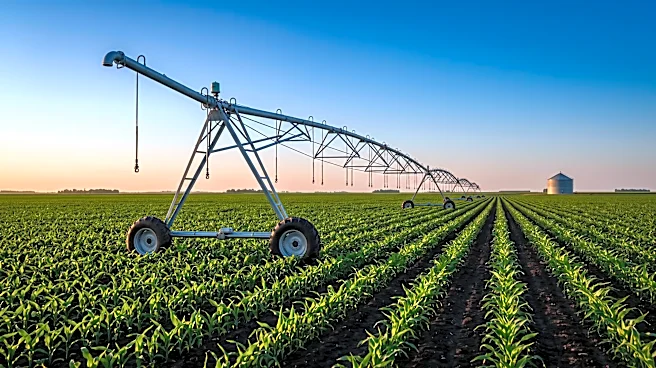
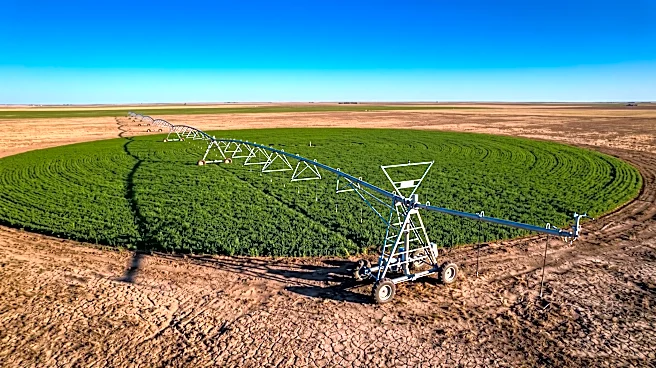
the groundwater completely disappears. According to John Duff, founder of Serō Ag Strategies, irrigation in Hockley County peaked decades ago and has been steadily decreasing since the 1960s. Farmers have already implemented various measures to adapt, such as reducing irrigated acreage, diversifying crops, connecting wells, and investing in more efficient irrigation systems. However, the ongoing decline suggests that future adjustments will likely be more costly and impactful on agricultural operations.
Why It's Important?
The shrinking Ogallala Aquifer poses a substantial threat to the economic stability of the High Plains agricultural sector and its supporting industries. Existing irrigated acres often represent significant capital investments, including advanced subsurface drip systems that can cost approximately $1,500 per acre. As wells weaken, this expensive equipment risks becoming stranded assets, potentially hindering a farm's ability to manage debt. The implications extend beyond individual farms, affecting a wide array of businesses and communities. Feedlots, dairies, ethanol plants, cotton gins, elevators, equipment dealers, processors, banks, and rural communities all rely heavily on the agricultural production sustained by High Plains groundwater. The continued decline of the aquifer could lead to widespread economic disruption and necessitate new approaches to water management and agricultural policy.
What's Next?
Future conservation programs will need to prioritize creating financial value for farmers, lenders, and supply-chain partners to effectively manage the anticipated further decline in water use. This suggests a shift towards policies and incentives that support sustainable water practices while also ensuring the economic viability of agricultural operations in the High Plains. The need for more expensive adjustments indicates that farmers may face increased financial burdens, potentially requiring innovative funding mechanisms or government support to transition to less water-intensive farming methods or alternative economic activities. The long-term sustainability of the region's agriculture and related industries hinges on proactive and economically sound strategies for water resource management.
Beyond the Headlines
The diminishing Ogallala Aquifer highlights a broader national challenge concerning water scarcity and its impact on agricultural heartlands. This situation underscores the complex interplay between environmental resources, economic development, and community resilience. The ethical dimension involves balancing immediate economic needs with long-term environmental sustainability and the equitable distribution of dwindling resources. Culturally, the reliance on the aquifer has shaped the identity and practices of farming communities for generations, and its decline necessitates a re-evaluation of traditional agricultural models. The long-term shift could involve a fundamental transformation of farming practices, regional economies, and potentially, population distribution as communities adapt to a future with significantly less available groundwater.