







What's Happening?
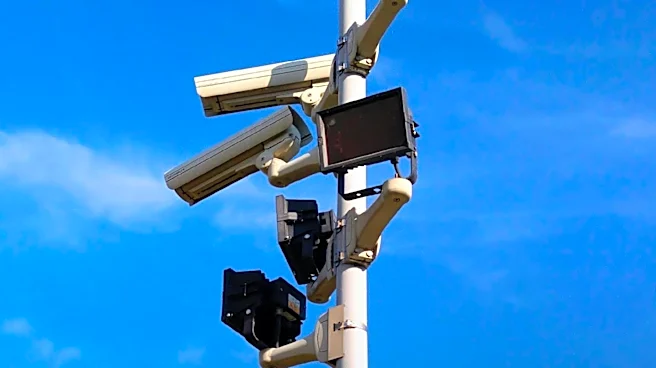
Flock Safety, a prominent vehicle surveillance company, has developed a new artificial intelligence tool for law enforcement called OS Investigate. This system, which was previously known as Nightshift, is designed to identify drivers and track vehicles
based on their movement patterns. Contrary to Flock Safety's previous public statements that its technology could not identify or track individuals, OS Investigate utilizes a network of cameras across over 6,000 communities to log driver movements. The tool can identify potential witnesses by analyzing how frequently their cars pass through a neighborhood and can also pinpoint a driver's associates by tracking vehicles that pass cameras together. The system integrates with police case files, 911 dispatch logs, and commercial identity records, allowing it to convert license plates into names, home addresses, and relatives. It can also search for individuals in a specified area using only a physical description. WIRED discovered 69 pre-written prompts within the software, which officers can select, review, or edit to submit to the AI. These prompts are part of a larger cache of over 450 files found on Flock's website, detailing 45 tools available to the AI, including access to plate scans, camera metadata, arrest records, ballistics results, and commercial databases containing sensitive personal information.
Why It's Important?
The introduction of Flock Safety's OS Investigate tool carries significant implications for privacy and civil liberties in the U.S. The system's ability to track individuals based on movement patterns and link this data with extensive personal information from various databases represents a substantial expansion of surveillance capabilities. This raises serious constitutional concerns, particularly regarding broad, often warrantless access to a vast record of people's movements. The tool shifts the paradigm from searching for a known vehicle or individual to casting suspicion on drivers based solely on their driving habits and locations, even without a prior crime or specific target. This could lead to increased scrutiny and potential profiling of individuals who have committed no wrongdoing. The integration of police case files, dispatch logs, and commercial identity records into a single AI-driven system creates a comprehensive surveillance apparatus that could be misused or lead to unintended consequences, impacting the rights of citizens to privacy and freedom of movement.
What's Next?
Flock Safety is currently testing OS Investigate with a limited number of law enforcement partners, indicating that the tool is still in development. The company states that the capabilities of the current version may not reflect the final product it eventually sells. However, the existence and testing of such a powerful AI surveillance tool are likely to intensify the ongoing debate surrounding privacy, technology, and policing. As the tool becomes more widely adopted or its capabilities are further refined, it is probable that civil liberties organizations and privacy advocates will increase their scrutiny and potentially challenge its legality and ethical implications. Lawmakers may also face pressure to introduce legislation that regulates the use of such advanced surveillance technologies by law enforcement agencies. The public's reaction to the deployment of this technology, especially if instances of misuse or privacy violations come to light, will also play a crucial role in shaping its future.
Beyond the Headlines
The development of OS Investigate highlights a deeper societal tension between public safety and individual privacy in the digital age. The tool's capacity to analyze patterns of behavior and link them to personal identities raises ethical questions about algorithmic bias and the potential for discriminatory outcomes. If the AI is trained on biased data or its algorithms are not transparent, it could disproportionately target certain communities or individuals. Furthermore, the reliance on commercial databases for personal information blurs the lines between public and private data, potentially eroding the expectation of privacy in everyday activities. The ease with which officers can generate 'canned searches' based on behavior patterns, rather than specific criminal suspicion, could lead to a 'guilty until proven innocent' mentality, where ordinary citizens are subjected to surveillance simply for their movement patterns. This technology could fundamentally alter the relationship between citizens and law enforcement, fostering a pervasive sense of being watched and potentially chilling free expression and association.