







What's Happening?
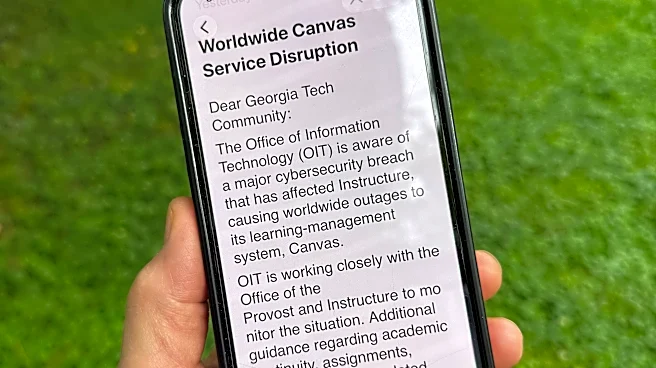
The online education platform Canvas, owned by Instructure, experienced a significant cyberattack, leading to a temporary outage that disrupted access to course materials for students and faculty during finals week. The hacking group ShinyHunters claimed
responsibility for the breach, which affected nearly 9,000 schools worldwide. The attack has potentially compromised data from millions of students and teachers, including names, email addresses, and student identification numbers. In response, Instructure took Canvas offline to contain the breach and engaged forensic experts to investigate. The incident has caused widespread disruption, particularly as many universities are in the middle of final exams and grading. Some school districts, such as Orange County Public Schools in Florida, have temporarily disabled access to Canvas as a precaution.
Why It's Important?
This cyberattack underscores the vulnerability of centralized educational platforms and the increasing reliance on technology in modern education. The breach highlights the potential risks to data privacy and security, affecting millions of students and educators. The incident also raises concerns about the preparedness of educational institutions to handle such cyber threats, as many schools rely heavily on digital platforms for instruction and operations. The attack could lead to increased scrutiny of cybersecurity measures in educational technology and prompt schools to reassess their data protection strategies. Additionally, the breach may influence public policy discussions on cybersecurity funding and support for educational institutions.
What's Next?
Instructure is working to restore full access to Canvas and has temporarily shut down its Free-For-Teacher accounts to prevent further unauthorized access. Schools affected by the breach are likely to implement additional security measures and may conduct risk assessments to identify vulnerabilities. The incident may prompt educational institutions to review their contracts with technology vendors, ensuring clear expectations for data protection and breach response. As the investigation continues, schools and districts will need to communicate with students and parents about the potential risks and any steps being taken to safeguard their data. The breach may also lead to calls for increased investment in cybersecurity resources for schools.
Beyond the Headlines
The Canvas cyberattack could have long-term implications for the education sector, highlighting the need for robust cybersecurity infrastructure and practices. The incident may accelerate the adoption of more secure technologies and drive innovation in data protection solutions. It also raises ethical questions about the responsibility of technology providers to safeguard user data and the potential consequences of data breaches on students' privacy and security. As cyber threats become more sophisticated, educational institutions may need to prioritize cybersecurity training for staff and students to mitigate risks. The breach could also influence future regulatory measures aimed at enhancing cybersecurity standards in education.