




What's Happening?
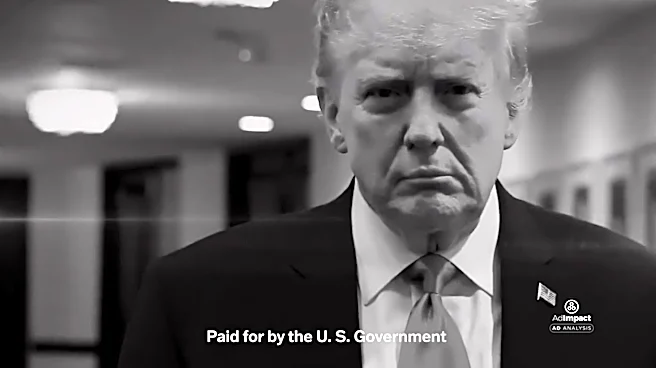
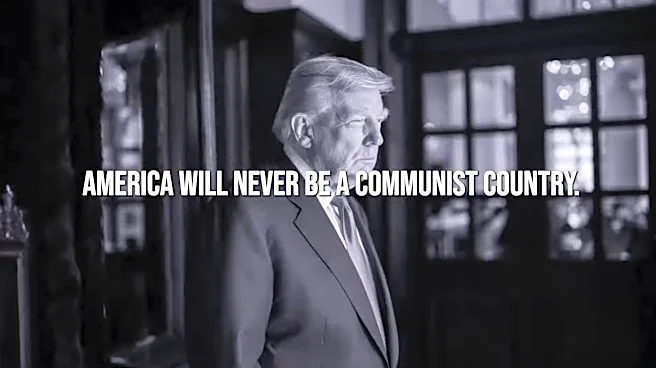
The White House has released a third taxpayer-funded advertisement promoting President Trump and his agenda, ahead of the November elections. This action has drawn criticism from Democrats and ethics experts who suggest these ads may violate a federal
prohibition against taxpayer-funded propaganda. The administration, however, defends these commercials as public service announcements. The latest ad bears a striking resemblance to a campaign ad President Trump posted on social media in early 2024 during his presidential campaign. Key differences include fine print indicating U.S. government funding and the absence of the 2024 campaign logo at the end. The commercial was broadcast multiple times over the weekend, including during 'Saturday Night Live' and NFL games, according to tracking firm AdImpact. This follows two other political-style ads released by the administration last week, one of which featured the song 'Love Me' alongside images of the President.
Why It's Important?
The release of taxpayer-funded ads promoting President Trump's agenda raises significant ethical and legal questions regarding the use of public funds for what critics argue are campaign-like purposes. Ethics experts, such as Richard Painter, former chief White House ethics lawyer under President George W. Bush, highlight congressional appropriations language that prohibits the use of federal funding for 'publicity or propaganda purposes within the United States.' Painter asserts that while such ads would be permissible if funded by a political party, they are inappropriate when paid for by American taxpayers. This situation underscores a potential blurring of lines between official government communications and political campaigning, which could erode public trust in government institutions and the electoral process. The bipartisan criticism, including from top Democrats on House and Senate Appropriations committees and Republican Senator Thom Tillis, indicates a broad concern across the political spectrum about the precedent these ads set for future administrations and the integrity of government spending.
What's Next?
The controversy surrounding the taxpayer-funded ads is likely to intensify as the November elections approach. Democrats on the House and Senate Appropriations committees have already written to the White House chief of staff, characterizing the ads as 'government propaganda' and an 'egregious and illegal misuse of Americans’ hard-earned tax dollars.' This suggests potential congressional inquiries or legislative efforts to further clarify or enforce restrictions on government-funded communications. Ethics watchdogs and legal experts will continue to scrutinize the administration's actions, potentially leading to formal complaints or legal challenges. The administration, meanwhile, is expected to maintain its stance that these are legitimate public service announcements. The ongoing debate will likely influence public perception of the White House's adherence to ethical guidelines and could become a significant talking point in the upcoming election cycle, with both sides using the issue to rally their bases.
Beyond the Headlines
This situation delves into the deeper implications of executive power and the potential for its misuse in shaping public opinion. The distinction between informing the public and promoting a political agenda is a cornerstone of democratic governance, and the alleged use of taxpayer money for what appears to be campaign-style advertising challenges this fundamental principle. It raises questions about the accountability of government spending and the checks and balances designed to prevent such abuses. Furthermore, the timing of these ads, ahead of a major election, could be seen as an attempt to leverage the power of the presidency for electoral advantage, potentially influencing voter sentiment. This development could also contribute to a broader trend of increasing political polarization and distrust in media, as the public grapples with discerning objective information from partisan messaging, especially when both emanate from official government channels. The long-term impact could be a re-evaluation of existing laws and ethical guidelines governing government communications.