



What's Happening?
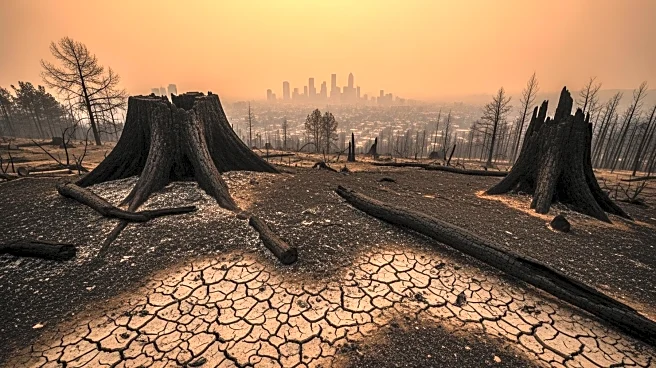
A year after the devastating wildfires in Los Angeles, the financial impact on property values has become evident. The Palisades and Eaton fires, which occurred in January 2025, led to a significant drop in property values in affected areas such as Pacific
Palisades and Altadena. According to a housing data analysis by Realtor.com, the total value of destroyed homes in these areas fell dramatically, with Pacific Palisades seeing a decrease from $14.7 billion to $10.8 billion, and Altadena from $7 billion to $4.7 billion. Even properties not directly damaged but located in the burn zones experienced value declines. The fires resulted in an estimated $8.3 billion loss in home value across these communities. The rebuilding process has been slow, with only a few homes fully reconstructed despite numerous permits issued. The fires, among the most destructive in California history, caused total property and capital losses estimated between $76 billion and $131 billion.
Why It's Important?
The wildfires have had a profound impact on the housing market in Los Angeles, particularly in the affected areas. The significant drop in property values reflects the challenges of rebuilding and the uncertainty surrounding future wildfires. The slow recovery process has left many residents displaced, highlighting the need for more efficient rebuilding efforts and better preparedness for future disasters. The insurance crisis in California, exacerbated by the fires, has also become a major obstacle for homeowners, with many turning to the state-backed insurer of last resort. This situation underscores the broader implications of climate change and the increasing risk of wildfires in high-risk areas, affecting not only property values but also the overall housing market stability.
What's Next?
The rebuilding process in Los Angeles is expected to continue, albeit slowly, as the city and county work to address permitting and construction bottlenecks. The insurance landscape remains a critical issue, with limited access to affordable coverage posing challenges for homeowners and potential buyers. As climate scientists warn of ongoing wildfire risks, there is a pressing need for improved disaster preparedness and more resilient infrastructure. The housing market in affected areas may see further shifts as investors and developers navigate the complexities of rebuilding and insurance challenges. The long-term recovery will depend on effective policy measures and community resilience efforts.
Beyond the Headlines
The wildfires have highlighted the vulnerabilities in Los Angeles' housing market and the broader implications of climate change. The destruction has not only affected property values but also exposed the limitations of current insurance systems and the need for more sustainable urban planning. The situation calls for a reevaluation of building codes, land use policies, and emergency response strategies to better protect communities from future disasters. Additionally, the fires have sparked discussions on the ethical and legal responsibilities of utility companies and the role of government in mitigating climate-related risks.