
What's Happening?
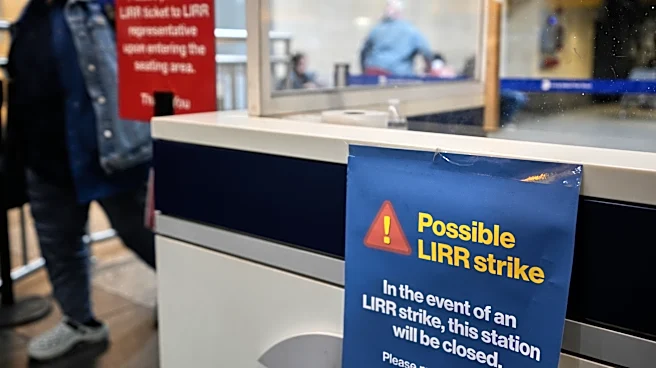
The Long Island Rail Road (LIRR) has been shut down due to a strike by union workers who have rejected the latest contract offers from the Metropolitan Transportation Authority (MTA). The strike has caused
significant disruptions for commuters relying on the LIRR for transportation. The union's decision to strike follows prolonged negotiations with the MTA, which have failed to reach a satisfactory agreement. The strike has led to increased traffic congestion and delays as commuters seek alternative transportation methods.
Why It's Important?
The LIRR is a critical component of the transportation infrastructure in the New York metropolitan area, serving thousands of commuters daily. The strike highlights ongoing labor disputes and the challenges of negotiating fair contracts in the public transportation sector. The disruption underscores the vulnerability of urban transit systems to labor actions and the broader implications for economic productivity and commuter satisfaction. The outcome of this strike could influence future labor negotiations and policies within the MTA and other public transportation entities.
What's Next?
Negotiations between the union and the MTA are expected to continue as both parties seek a resolution to the strike. The MTA may explore alternative measures to mitigate the impact on commuters, such as increased bus services or temporary agreements. The strike's duration and resolution will depend on the willingness of both parties to compromise and address key issues such as wages, benefits, and working conditions. Commuters and businesses will be closely monitoring developments, as prolonged disruptions could have significant economic and social impacts.