






What's Happening?
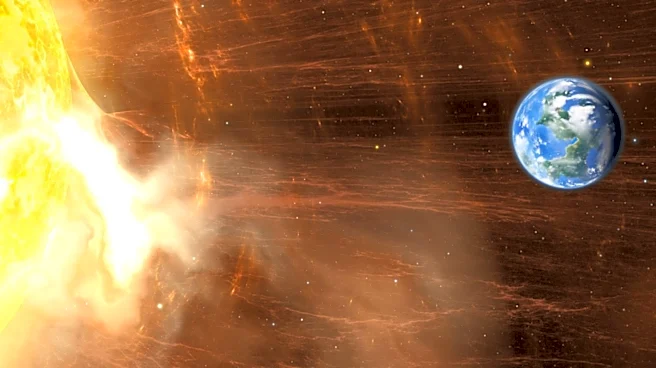
A new study suggests that the risks associated with solar storms may have been underestimated due to misunderstandings in measuring the electrical currents generated in Earth's upper atmosphere. Conducted by NASA's Nithin Sivadas and Maria Walach of Lancaster
University, the research indicates that there may not be an upper limit to the electrical currents produced by solar winds, contrary to previous beliefs. This finding suggests that solar storms could pose a greater threat to satellites and astronauts than previously thought.
Why It's Important?
Understanding the true risks of solar storms is crucial for protecting satellites and other space-based technologies that are vital to modern life. If solar storms are indeed more dangerous than previously believed, it could have significant implications for industries reliant on satellite technology, such as telecommunications and navigation. The study highlights the need for improved modeling and preparedness for extreme space weather events, which could potentially disrupt global communications and power grids.
Beyond the Headlines
The study raises questions about the adequacy of current space weather monitoring and the need for more comprehensive data collection. It also underscores the importance of international collaboration in developing strategies to mitigate the impact of solar storms. As the sun approaches the end of its current solar maximum, the likelihood of extreme space weather events decreases, but the study emphasizes the need for vigilance and preparedness for future solar cycles.