






What's Happening?
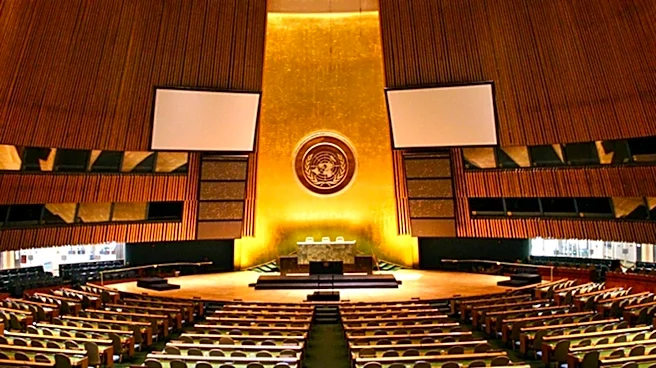
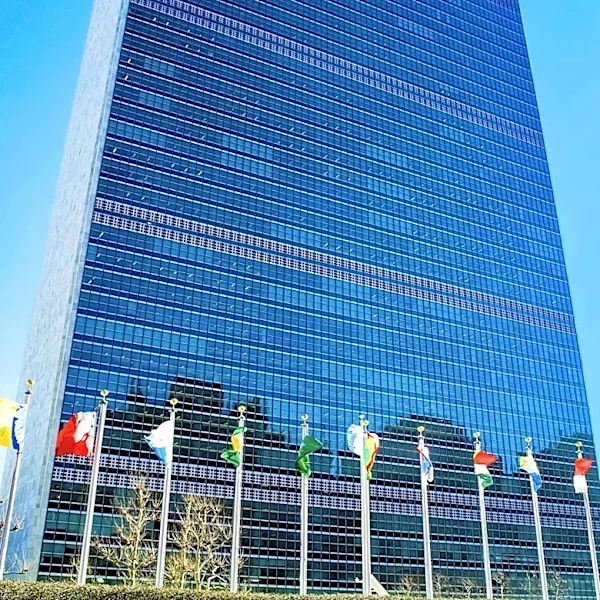
India reaffirmed its commitment to addressing climate change at the Third Committee of the UN General Assembly, emphasizing an approach rooted in equity, climate justice, and sustainable development. Deputy Secretary in the Ministry of External Affairs,
Barkha Tamrakar, delivered India's statement on the Report of the Special Rapporteur on the independence of judges and lawyers, titled "An urgent and existential threat: the role of justice systems in addressing the climate crisis." Tamrakar highlighted that India views climate change as a significant global challenge impacting development, livelihoods, and human rights. She stressed India's adherence to the principle of Common But Differentiated Responsibilities and Respective Capabilities (CBDR-RC). India's institutional and legal frameworks, including its Constitution, comprehensive legislation, the National Green Tribunal (NGT), and an independent judiciary, strongly support environmental protection. Tamrakar also noted the transparent, institutionally supervised judicial training, including through the National Judicial Academy, aimed at strengthening impartiality and preserving judicial independence.
Why It's Important?
India's statement at the UN General Assembly underscores the growing international recognition of the judiciary's critical role in addressing climate change. For the U.S., this perspective aligns with broader efforts to promote rule of law and good governance in environmental protection globally. India's emphasis on equity, climate justice, and CBDR-RC highlights a key point of discussion in international climate negotiations, where developing nations often advocate for differentiated responsibilities based on historical emissions and economic capacities. This approach can influence global climate policy and the allocation of resources for climate action, potentially impacting U.S. foreign aid and climate finance strategies. The mention of an independent judiciary and institutions like the National Green Tribunal demonstrates a commitment to legal enforcement of environmental regulations, which can serve as a model or point of comparison for other nations, including those with whom the U.S. collaborates on environmental initiatives. The focus on judicial training also points to the importance of specialized legal expertise in tackling complex environmental issues.
What's Next?
Following India's statement, discussions within the UN General Assembly's Third Committee and other international forums are likely to continue exploring the intersection of justice systems and climate action. India's continued advocacy for equity and CBDR-RC will shape future climate negotiations and potentially influence the development of international legal frameworks for environmental protection. Other nations may be encouraged to review and strengthen their own judicial and institutional mechanisms for addressing climate change, potentially leading to increased international cooperation on environmental law and governance. The emphasis on judicial independence and specialized training could also inspire initiatives to build legal capacity in developing countries, possibly with support from international partners. The ongoing work of the Special Rapporteur on the independence of judges and lawyers will likely continue to highlight best practices and challenges in this area, providing further guidance for national and international efforts.
Beyond the Headlines
The integration of judicial systems into climate change discourse signifies a deeper understanding of climate action as a matter of rights and justice, not just environmental policy. This perspective moves beyond purely scientific or economic considerations to acknowledge the human impact of climate change and the need for legal recourse and protection. For the U.S., this broader view could influence domestic environmental justice initiatives and international human rights advocacy related to climate impacts. The concept of 'climate justice' challenges traditional notions of environmental regulation by emphasizing fairness and the disproportionate impact of climate change on vulnerable populations. This shift could lead to new legal precedents and a more robust framework for holding states and corporations accountable for environmental damage. Furthermore, the role of an independent judiciary in upholding environmental laws and protecting human rights in the face of climate change underscores the foundational importance of democratic institutions in addressing global crises.