


What's Happening?
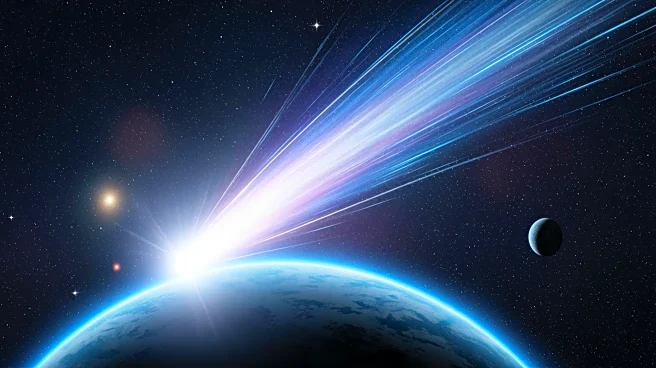
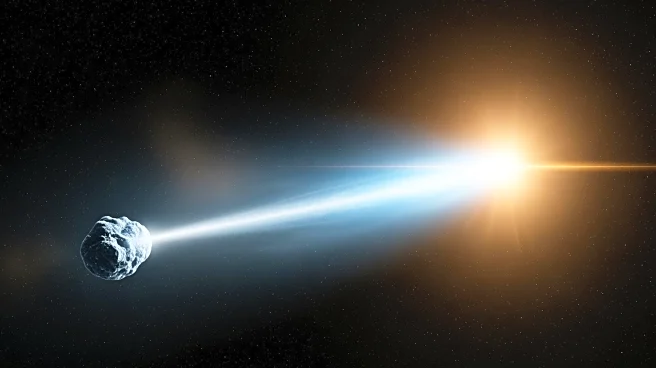
Comet 3I/ATLAS, a rare interstellar object, is making its final journey through the solar system before disappearing into deep space. Discovered in July 2025 by an automated telescope in Chile, this comet is only the third known interstellar object to be detected
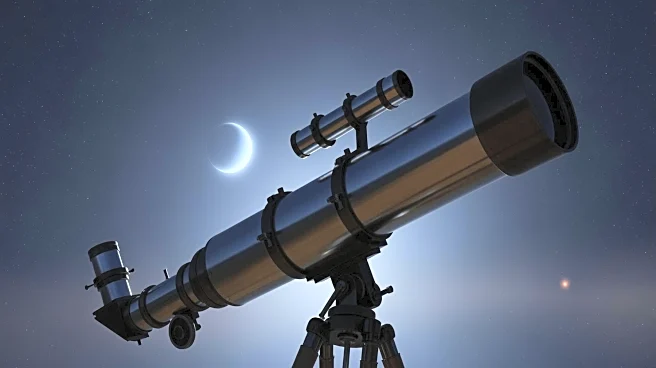
in our solar system. Its high velocity and unbound trajectory confirmed its origin from outside the solar system. The Virtual Telescope Project is hosting a livestream to allow the public to witness the comet's final moments as it exits the solar system. The broadcast will use a 14-inch Schmidt-Cassegrain robotic telescope based in Italy to provide real-time views of the comet. 3I/ATLAS has shown classic comet behavior, releasing jets of gas as it heats up, a process known as outgassing. This makes it a significant discovery, as noted by Gianluca Masi, founder of the Virtual Telescope Project.
Why It's Important?
The departure of 3I/ATLAS is significant as it represents a rare opportunity to study an interstellar object. Such objects provide valuable insights into the composition and behavior of celestial bodies from outside our solar system. The comet's behavior, particularly its outgassing, offers clues about the materials and conditions present in other star systems. This event also highlights the advancements in astronomical technology and observation techniques, allowing scientists and the public to engage with phenomena that were previously inaccessible. The study of interstellar objects like 3I/ATLAS can enhance our understanding of the universe and potentially inform future space exploration missions.
What's Next?
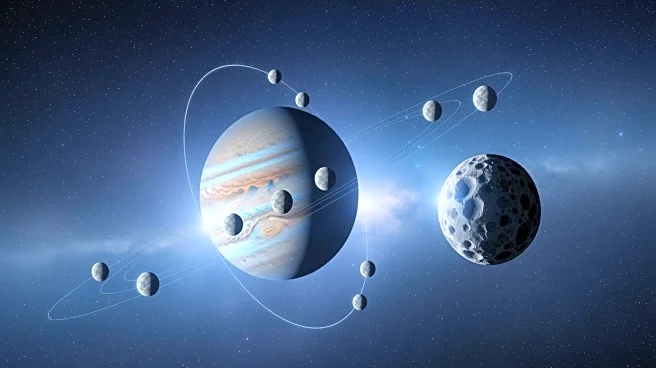
Following its final flyby of Earth, 3I/ATLAS will make a close pass by Jupiter in March, coming within 53.7 million kilometers of the planet. After this interaction, the comet will head towards the outer regions of the solar system, eventually passing through the Oort cloud and continuing into interstellar space. It is unlikely to return for thousands or even millions of years. The scientific community will continue to analyze data collected during its passage to gain further insights into its composition and origin. The public's interest in such events may encourage further investment in space observation technologies and initiatives.