
What's Happening?
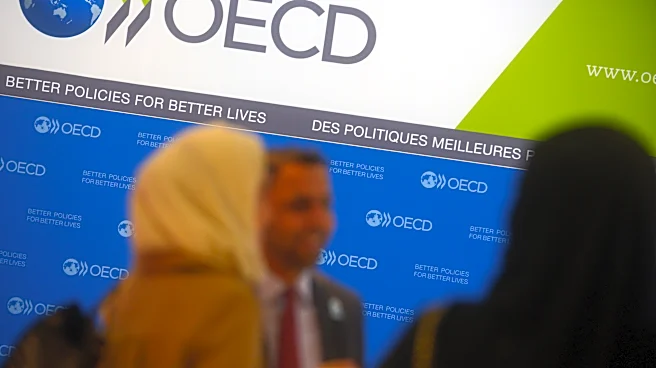
A 174-page report from the Organisation for Economic Co-operation and Development (OECD), titled 'Analysis of Trends in South Korea’s Fertility, Labor, and Family Policies,' indicates that while South Korea has
made progress in family support policies, its labor market systems and workplace culture have not kept pace. The report, released on November 8th, analyzes the country's low birth rate from multiple perspectives, including family support, the labor market, and societal perceptions. It specifically points out the difficulty for Korean women to balance work and childcare, despite increased government support. The OECD emphasizes that many Korean women still face a choice between their careers and family life, calling for improvements in the labor market and workplace culture.
Why It's Important?
While this report focuses on South Korea, its findings resonate with broader discussions in the U.S. and other developed nations regarding work-life balance, gender equality in the workplace, and declining birth rates. The challenges faced by South Korean women in balancing work and family, despite government support, highlight the critical role of workplace culture and flexible work arrangements. In the U.S., similar issues contribute to workforce participation gaps and impact family planning decisions. The OECD's call for improvements in labor market systems and workplace culture serves as a reminder for U.S. policymakers and businesses to evaluate their own approaches to family-friendly policies, flexible work options, and support for working parents. Addressing these issues can enhance workforce productivity, promote gender equity, and potentially influence demographic trends.
What's Next?
The OECD's recommendations for South Korea suggest a need for comprehensive reforms in labor market policies and a shift in workplace culture. For the U.S., this report could serve as a comparative case study, prompting discussions on how to better integrate family support with professional life. Businesses in the U.S. might consider expanding flexible work options, such as remote work and flexible hours, to better support employees with caregiving responsibilities. Policymakers could explore legislative measures that encourage family-friendly workplaces and address the societal expectations that often place a disproportionate burden of childcare on women. The ongoing global competition for talent also makes it imperative for countries to create environments where individuals can thrive professionally and personally.
Beyond the Headlines
The OECD report implicitly highlights the societal and economic costs of rigid workplace cultures. When individuals, particularly women, are forced to choose between career and family, it represents a loss of human capital and potential economic contribution. This issue extends beyond individual choices to impact national productivity, innovation, and long-term demographic stability. The report's emphasis on the low adoption of remote work in South Korea, compared to EU averages, underscores a global disparity in embracing modern work models. For the U.S., this suggests that while progress has been made in flexible work, there's still room for improvement in fostering truly family-friendly environments that support both parents, thereby promoting gender equity and maximizing workforce participation.