




What's Happening?
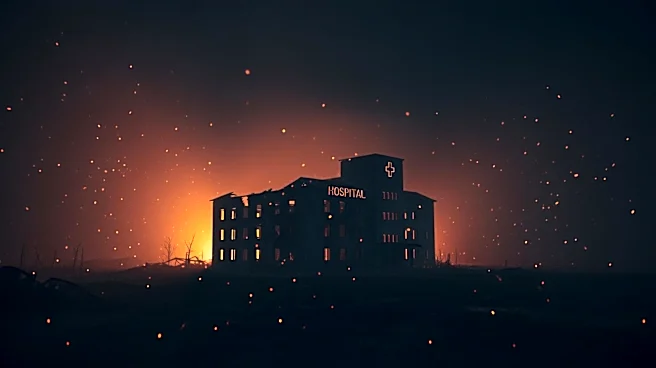
In the Democratic Republic of Congo, a second Ebola treatment center was set on fire by angry residents in the town of Mongbwalu. This incident follows a similar attack earlier in the week in the town of Rwampara. The attack led to 18 patients with suspected
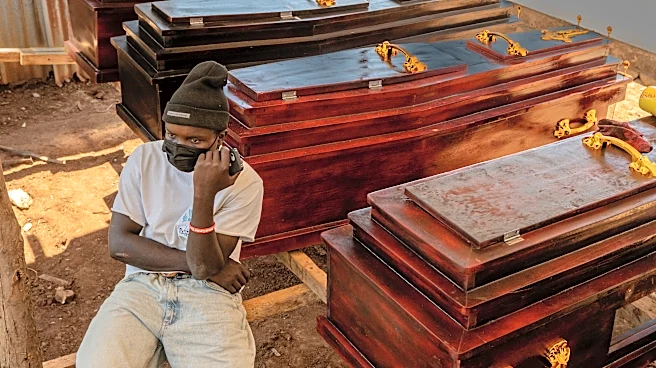
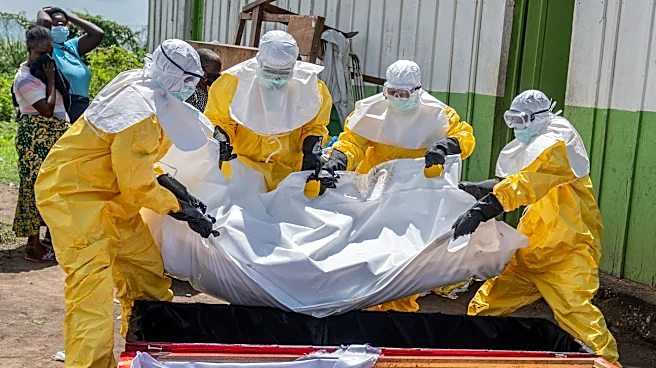
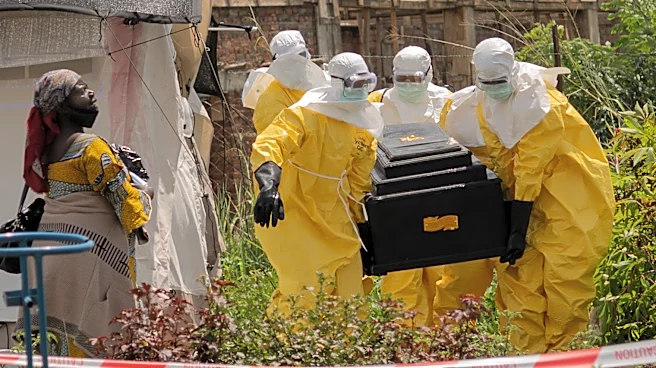
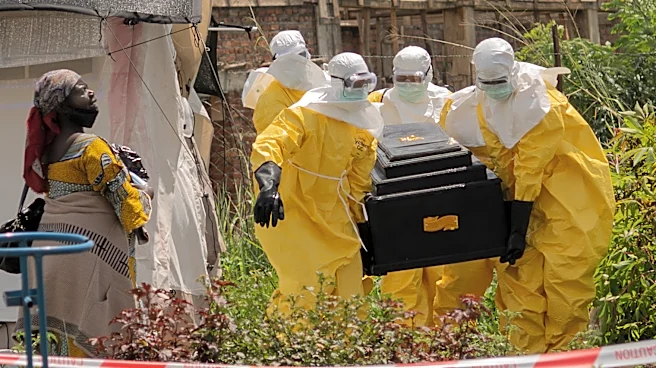
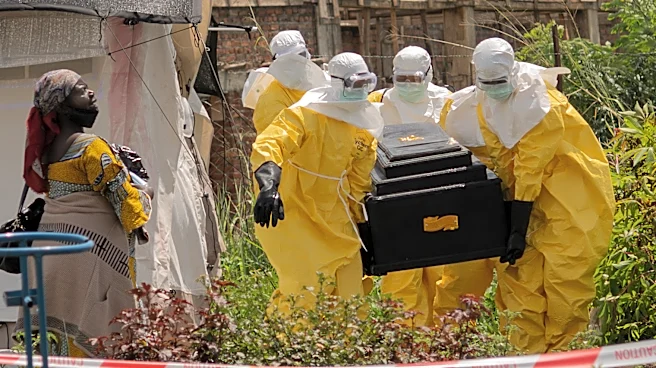
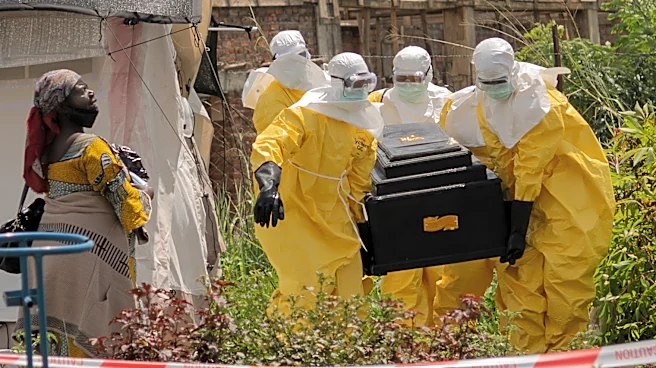
Ebola infections fleeing the facility, and they are currently unaccounted for. The attack was reportedly triggered by community tensions over the handling of Ebola cases and the restrictions placed on family members regarding the retrieval of bodies of those who died from the virus. The World Health Organization has raised the risk level of the outbreak in Congo to 'very high', although the global risk remains low. The outbreak involves the Bundibugyo virus, a rare type of Ebola, and has resulted in 82 confirmed cases and seven deaths, with more suspected cases and deaths under investigation.
Why It's Important?
The attacks on Ebola treatment centers in Congo highlight the challenges faced by health workers in managing outbreaks in regions with community resistance. The escape of suspected Ebola patients poses a significant risk of further spreading the virus, complicating containment efforts. The situation underscores the importance of building trust between health authorities and local communities to ensure effective disease management. The outbreak's escalation to a 'very high' risk level within Congo could strain local health resources and necessitate increased international support. The absence of a vaccine for the Bundibugyo virus further complicates response efforts, emphasizing the need for rapid containment and community cooperation.
What's Next?
Authorities in northeastern Congo have banned funeral wakes and gatherings of more than 50 people to curb the virus's spread. Health organizations, including the World Health Organization and the Africa Centers for Disease Control and Prevention, are likely to intensify efforts to build community trust and improve surveillance. The international community may need to provide additional support to prevent the outbreak from escalating further. Monitoring of suspected cases and deaths will continue, with a focus on preventing cross-border spread to neighboring countries like Uganda.
Beyond the Headlines
The attacks on Ebola treatment centers reflect deeper issues of mistrust and misinformation within affected communities. These incidents highlight the need for culturally sensitive communication strategies and community engagement to address fears and misconceptions about Ebola. The situation also raises ethical concerns about the balance between public health measures and respecting local customs and traditions, particularly regarding burial practices. Long-term solutions may involve integrating local leaders and community members into health response planning to foster cooperation and understanding.