






What's Happening?
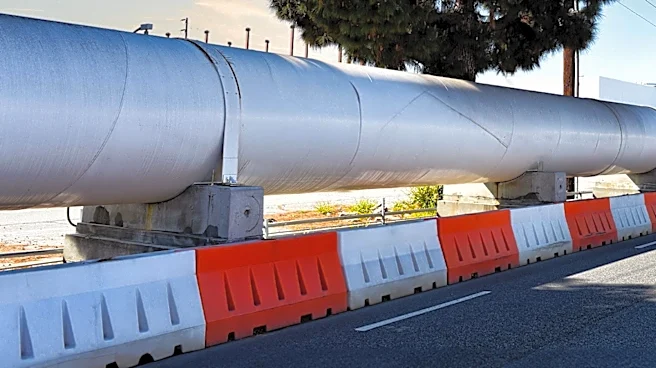
Canada is reviving plans for a new oil pipeline to connect its eastern and western regions, aiming to reduce reliance on U.S. oil routes. The proposed 3,300-kilometre pipeline would transport up to 500,000 barrels per day from Hardisty, Alberta, to Sarnia,
Ontario, with potential expansion to 800,000 barrels per day. This initiative comes as Canada seeks to enhance its energy security and develop new export markets. The project, supported by Alberta's Premier Danielle Smith and Canada's Prime Minister Mark Carney, promises a meaningful ownership stake for Indigenous communities and aims to maintain environmental safeguards.
Why It's Important?
The proposed pipeline represents a significant shift in Canada's energy strategy, focusing on self-reliance and reducing dependency on U.S. infrastructure. This move could bolster Canada's energy security and open new export opportunities, particularly to Europe. However, the project faces opposition from environmentalists and Indigenous groups concerned about climate change and potential environmental impacts. The pipeline's development could also influence U.S.-Canada energy relations, as it may alter the dynamics of crude oil imports and exports between the two countries.
What's Next?
The Canadian government plans to commence consultations with Indigenous communities and other stakeholders to address concerns and ensure fair compensation for environmental risks. The project's success will depend on balancing economic benefits with environmental and social responsibilities. If approved, the pipeline could significantly impact Canada's energy landscape and its role in the global oil market.