





What's Happening?
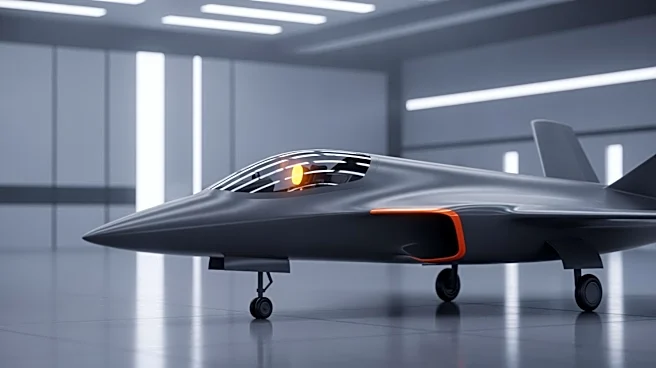
NASA's X-59 supersonic technology demonstrator has resumed its flight test campaign after a cockpit warning light incident cut short its second flight. The X-59, part of NASA's Quiet Supersonic Technology (Quesst) mission, aims to reduce the noise of sonic booms
to a softer 'thump.' The aircraft's second flight on March 20, 2026, was aborted just nine minutes after takeoff from Edwards Air Force Base due to a vehicle system alert. A post-flight inspection revealed that the warning was triggered by an incorrectly installed instrument, which was subsequently fixed. Following the correction, the X-59 successfully completed back-to-back flights on March 26 and 27, advancing its envelope expansion testing. The aircraft is designed to reach altitudes of up to 60,000 feet and speeds of Mach 1.5, with future tests focusing on its low-boom sound levels.
Why It's Important?
The X-59 project is significant as it represents a potential breakthrough in supersonic travel by addressing the noise pollution associated with sonic booms. If successful, the technology could lead to the development of commercial supersonic flights over land, which are currently restricted due to noise concerns. This advancement could revolutionize air travel, reducing flight times significantly. The project also highlights NASA's collaboration with Lockheed Martin Skunk Works, showcasing the potential for public-private partnerships in advancing aerospace technology. The successful continuation of the X-59 tests is crucial for gathering data on public response to the reduced noise levels, which will inform future regulatory decisions on supersonic flight.
What's Next?
The next phase of the X-59 testing will focus on expanding the flight envelope to achieve the target altitude and speed. Following this, the program will assess the aircraft's low-boom sound levels through overflights to collect public response data. These steps are essential for validating the technology's effectiveness in reducing sonic boom noise. The outcomes of these tests will play a critical role in determining the feasibility of commercial supersonic flights over land, potentially leading to regulatory changes that could open new markets for supersonic travel.