






What's Happening?
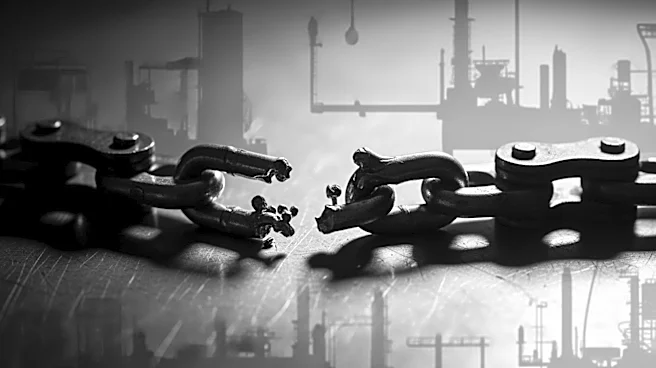
Industrial production in Bangladesh is facing significant challenges due to instability in global supply chains, exacerbated by the ongoing conflict in the Middle East. Key raw materials are becoming scarce, leading to concerns about potential production slowdowns.
Industry stakeholders report that price hikes are compounded by acute instability in global supply chains and order processing. Kamruzzaman Kamal, marketing director of PRAN-RFL Group, highlighted a shortage of plastic raw materials, with operations currently sustained by existing pipeline stocks. Saleudh Zaman Khan, managing director of NZ Apparels, noted the unavailability of certain chemicals, previously imported from India, which could lead to production disruptions for smaller firms soon. The conflict has disrupted global fuel supplies, shipping routes, and trade flows, contributing to delays and uncertainty in sourcing raw materials.
Why It's Important?
The disruption in global supply chains due to the Middle East conflict has significant implications for industrial production, particularly in countries reliant on imported raw materials. Rising costs and supply risks are straining industries, potentially leading to production bottlenecks and economic slowdowns. This situation highlights the vulnerability of global trade networks to geopolitical tensions, which can have cascading effects on economies worldwide. Industries that depend heavily on specific raw materials may face operational challenges, affecting their ability to meet demand and maintain profitability. The broader impact on global trade and economic stability underscores the need for diversified supply chains and contingency planning to mitigate risks associated with geopolitical conflicts.
What's Next?
If the conflict in the Middle East persists, industries may need to explore alternative sources for raw materials or adjust production strategies to cope with shortages. Companies might increase efforts to secure supply chain resilience by diversifying suppliers and investing in local production capabilities. Governments and industry leaders may engage in diplomatic efforts to stabilize trade routes and ensure the flow of essential goods. Additionally, businesses could face increased pressure to innovate and adapt to changing market conditions, potentially leading to shifts in industrial practices and economic policies.
Beyond the Headlines
The ongoing supply chain disruptions highlight the interconnectedness of global economies and the potential for geopolitical events to impact industries far beyond their immediate vicinity. This situation may prompt a reevaluation of global trade dependencies and encourage investment in sustainable and resilient supply chain models. The ethical implications of relying on conflict-prone regions for critical resources may also come under scrutiny, driving discussions on responsible sourcing and corporate social responsibility. Long-term shifts in industrial strategies could emerge as companies seek to balance efficiency with risk management in an increasingly volatile global landscape.