



What's Happening?
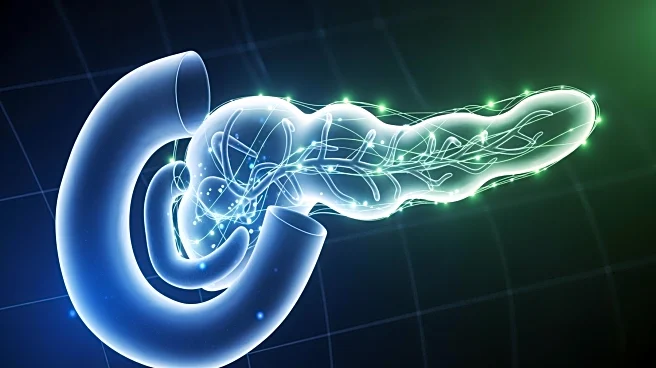
Researchers from the German Center for Diabetes Research have developed an AI-based approach to identify subtle changes in pancreatic tissue associated with type 2 diabetes. This new method utilizes deep learning models to analyze extensive datasets of
human pancreatic tissue samples from living donors. The AI technology has successfully distinguished diabetic from non-diabetic tissue samples, revealing previously hidden features such as alterations in the islets of Langerhans and changes in α-cells and δ-cells. The study, published in Nature Communications, highlights the potential of AI to enhance traditional histopathology by providing a more precise and interpretable analysis of tissue samples.
Why It's Important?
The development of AI tools to detect early tissue-level changes in type 2 diabetes is significant due to the global impact of the disease, which affects approximately 500 million people worldwide. Traditional methods of examining pancreatic tissue have limitations, especially when relying on post-mortem samples. The AI approach offers a new level of precision, potentially leading to earlier diagnosis and improved therapeutic strategies. By identifying specific biomarkers, this technology could pave the way for more targeted treatments and a better understanding of the disease's progression, ultimately benefiting patients and healthcare providers.
What's Next?
The AI-based method is expected to advance diagnostic and therapeutic exploration in type 2 diabetes. Researchers may continue to refine the technology, expanding its application to other diseases and conditions. The success of this approach could encourage further investment in AI-driven medical research, potentially leading to breakthroughs in other areas of healthcare. Stakeholders, including medical institutions and pharmaceutical companies, may explore collaborations to integrate AI into routine diagnostic processes, enhancing patient care and treatment outcomes.
Beyond the Headlines
The use of AI in medical diagnostics raises ethical and legal considerations, particularly regarding data privacy and the accuracy of AI predictions. As AI becomes more integrated into healthcare, there will be a need for regulatory frameworks to ensure patient safety and data protection. Additionally, the reliance on AI technology may shift the role of traditional pathologists, requiring new training and adaptation to AI-assisted diagnostics. The long-term impact of AI on healthcare could lead to more personalized medicine, with treatments tailored to individual patients based on precise biomarker identification.