

What's Happening?
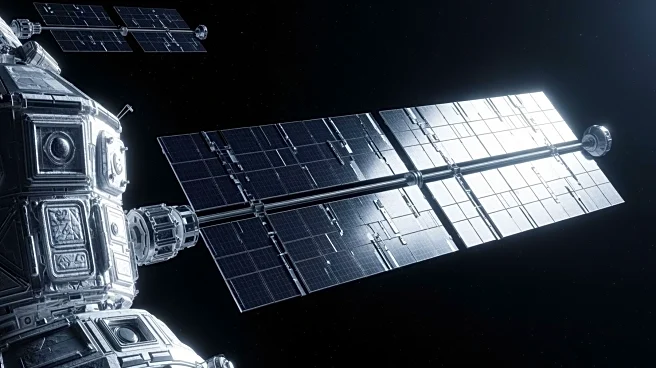
NASA astronauts Mike Fincke and Zena Cardman are set to conduct the first spacewalk of 2026 from the International Space Station (ISS) on Thursday. The spacewalk, scheduled to last six and a half hours, aims to prepare the ISS for new roll-out solar arrays.
The astronauts will exit the Quest airlock to install a modification kit and route cables on the station's port side truss structure. This preparation is crucial for the upcoming delivery of the solar arrays on a future cargo mission. Additional tasks include installing jumper cables, photographing station hardware, and collecting microorganism samples from external surfaces. The spacewalk is part of a broader effort to maintain and upgrade the ISS's capabilities. NASA's Chris Williams and JAXA's Kimiya Yui will assist Fincke and Cardman with spacesuit operations and airlock procedures. The spacewalk will be previewed on NASA's YouTube channel.
Why It's Important?
The upcoming spacewalk is significant for the continued operation and enhancement of the International Space Station's power systems. By installing new solar arrays, NASA aims to increase the station's energy efficiency and capacity, which is vital for supporting ongoing scientific research and future missions. The ISS serves as a critical platform for international collaboration in space exploration, and maintaining its infrastructure ensures that it can continue to host experiments that benefit various fields, including pharmaceuticals and materials science. The spacewalk also highlights the importance of international cooperation, with astronauts from NASA and JAXA working together to achieve common goals. This collaboration underscores the global nature of space exploration and the shared benefits of scientific advancements made in space.
What's Next?
Following the spacewalk, the ISS crew will continue preparations for the arrival of the new solar arrays on a future cargo mission. The successful installation of these arrays will enhance the station's power generation capabilities, supporting more complex experiments and potentially extending the station's operational lifespan. NASA plans to conduct a second spacewalk on January 15, which will further contribute to the station's maintenance and upgrades. As the ISS continues to serve as a hub for international research, future missions may focus on expanding its capabilities and exploring new scientific frontiers. The ongoing collaboration between space agencies like NASA and JAXA will likely lead to more joint missions and shared technological advancements.