





What's Happening?
Mimouna is a Moroccan Jewish celebration that occurs at the end of Passover, marked by open homes, shared food, music, and joy. It is celebrated by North African Jews worldwide, particularly in Israel. The festival has historical roots in Morocco, where
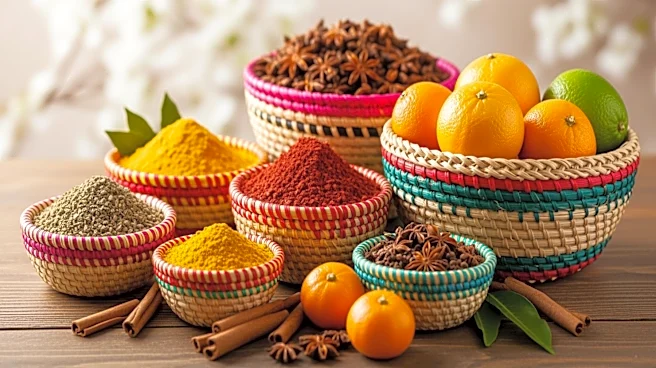
Jewish communities have existed since the 4th century BCE. Mimouna symbolizes coexistence between Jewish and Amazigh communities, reflecting a shared history and mutual dependence. The celebration traditionally involves Jewish families opening their homes to Muslim neighbors, who bring flour and other provisions, marking the return of abundance after Passover. The name 'Mimouna' is derived from the Moroccan Arabic word for 'wealth' or 'good fortune,' capturing the festival's forward-looking ethos. Mimouna also serves as a marker of political legitimacy for the Moroccan Sultanate, indicating a society where different communities coexist under state protection.
Why It's Important?
Mimouna is significant for its role in promoting cultural coexistence and dialogue between Jewish and Muslim communities. It reflects a historical pattern of mutual recognition and shared culture, which is echoed in modern diplomatic efforts like the Abraham Accords. These agreements, normalizing relations between Israel and several Muslim states, including Morocco, represent a reactivation of historical coexistence patterns. Mimouna's ethos of open homes and intercommunal exchange requires trust and stability, highlighting the importance of political legitimacy and societal equilibrium. The celebration serves as a reminder of the potential for peaceful coexistence and cultural dialogue, offering a model for future interactions between diverse communities.