






What's Happening?
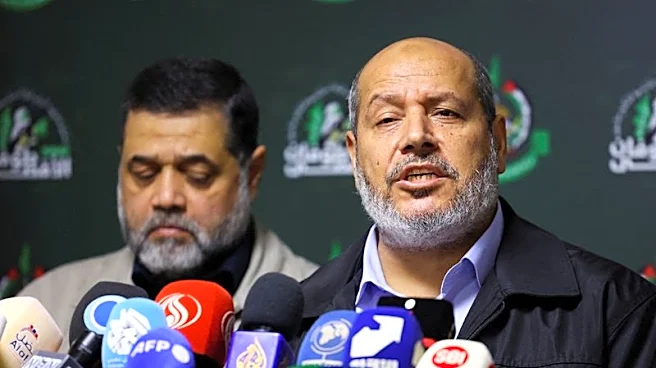
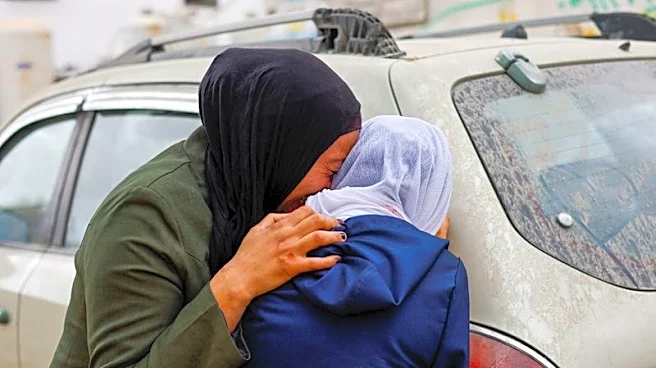
The son of Hamas' chief negotiator, Khalil al-Hayya, has died following injuries sustained from an Israeli airstrike in Gaza. The strike, which occurred in Gaza City, also resulted in the death of another individual and injured several others. This incident
is part of ongoing hostilities between Israel and Hamas, despite a U.S.-brokered ceasefire that was intended to halt major military operations. The ceasefire agreement, which followed a significant attack by Hamas in 2023, remains partially unfulfilled, with key stipulations such as the disarmament of Hamas and the deployment of an international stabilization force still pending. Israel continues to conduct strikes against what it identifies as militant targets, which have also resulted in civilian casualties.
Why It's Important?
The death of Khalil al-Hayya's son underscores the ongoing volatility in the region and the challenges in achieving a lasting peace. The continued Israeli strikes and the targeting of Hamas leaders and their families highlight the tensions and the potential for further escalation. This situation affects not only the immediate parties involved but also has broader implications for regional stability and international diplomatic efforts. The U.S.'s role as a mediator is crucial, yet the lack of progress in fulfilling the ceasefire terms suggests a complex geopolitical landscape that could impact future negotiations and peace efforts.
What's Next?
The continuation of Israeli strikes and the targeting of Hamas figures may lead to further retaliatory actions, potentially escalating the conflict. The international community, particularly the U.S., may face increased pressure to intervene more decisively to ensure the ceasefire terms are met and to prevent further loss of life. The situation remains fluid, with potential implications for regional alliances and the broader Middle East peace process.