
What's Happening?
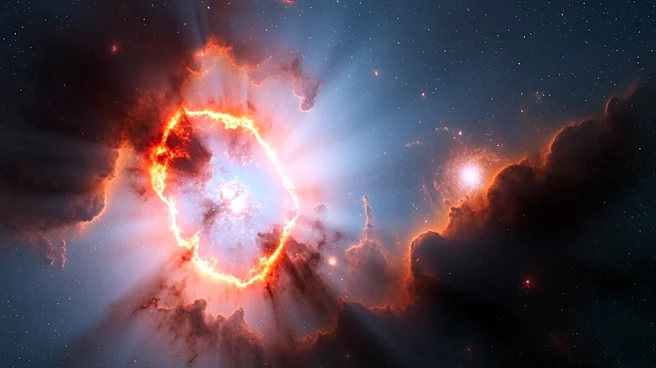
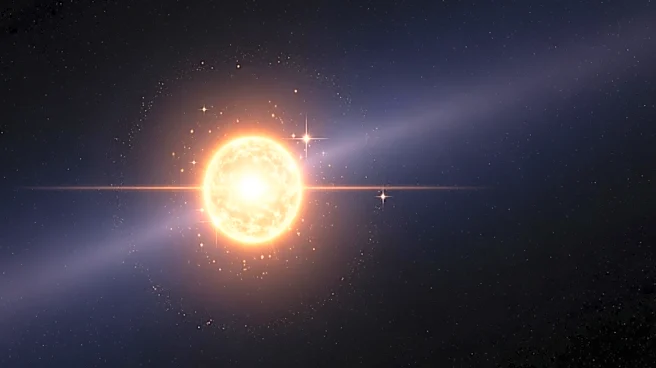
Scientists have identified a new class of stellar remnants, including two objects named 'Gandalf' and 'Moon-sized,' which emit X-rays without a companion star. These objects, formed from cosmic collisions,
exhibit high magnetic activity and rapid rotation. The discovery challenges existing understanding of stellar remnants, as these objects do not fit into known categories. The research suggests that these remnants have unique properties, such as asymmetric magnetic fields and the presence of circumstellar material, which could provide new insights into stellar evolution.
Why It's Important?
The discovery of 'Gandalf' and 'Moon-sized' expands the understanding of stellar remnants and the processes that lead to their formation. These findings could have implications for the study of binary systems and the role of magnetic fields in stellar evolution. The research highlights the complexity of stellar remnants and the need for continued exploration of these objects to refine existing models. Understanding these remnants could also provide insights into the life cycles of stars and the dynamics of cosmic collisions.