







What's Happening?
Thailand's Deep South experienced a coordinated wave of over 50 attacks between August 22-23, with the tally rising to at least 79 incidents by August 29. These attacks, carried out by insurgents, caused significant disruption to daily life and local
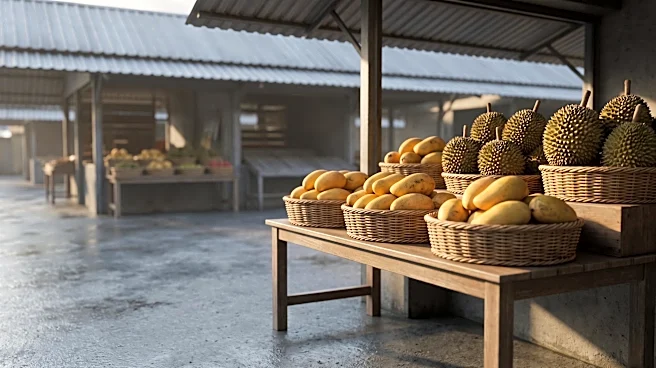
businesses in the predominantly Malay-Muslim provinces of Pattani, Yala, and Narathiwat. Multiple local government offices and several vehicles were damaged or destroyed. Incidents included insurgents forcing customers out of a 7-Eleven before setting it on fire, burning tires on streets, and the imposition of a mandatory curfew. Vendors at the Su-Ngai Kolok wet market, who typically transport popular fruits like mangoes and durian, are now forced to sell their produce at significantly reduced prices due to difficulties in moving goods outside the region. This latest wave of violence has altered residents' long-standing resignation to the insurgency as a part of life.
Why It's Important?
The recent surge in coordinated insurgent attacks in Thailand's Deep South has profound implications for the region's economy and social fabric. The disruption of commerce, particularly for agricultural products, directly impacts the livelihoods of local vendors and farmers, leading to significant financial losses and economic instability. The forced sale of goods at 'throwaway prices' highlights the vulnerability of local economies to such conflicts. Beyond economic consequences, the attacks have instilled a heightened sense of insecurity, forcing residents to adjust daily routines and limiting freedom of movement. The shift from a resigned acceptance of insurgency to a more acute awareness of its disruptive power suggests a potential escalation in the conflict's impact on civilian life. This situation underscores the challenges in achieving lasting peace and stability in regions plagued by long-standing insurgencies, affecting both economic development and community well-being.
What's Next?
The immediate future in Thailand's Deep South will likely involve continued heightened security measures and efforts to restore normalcy. Formal talks between the Thai government and the National Revolutionary Front (BRN), the main separatist group, were expected to resume, but the recent violence may complicate these negotiations. Local communities, including Catholic parishes and schools, are already adapting by rescheduling activities and adjusting routines to ensure safety. The economic impact on vendors and businesses is expected to persist as long as transportation and market access remain challenging due to security concerns. The long-term outlook depends on the effectiveness of security forces in curbing insurgent activities and the progress of peace talks in addressing underlying grievances related to self-government, security measures, and political representation. The resilience of the social fabric, as noted by observers, will be tested further by sustained disruption.
Beyond the Headlines
The insurgency in Thailand's Deep South reveals deeper societal and cultural dimensions beyond the immediate violence. The historical context of the region, once an independent Malay sultanate, contributes to the complex identity politics at play. The conflict's impact on daily life, from market vendors to religious institutions, illustrates how prolonged instability erodes trust and alters community dynamics. The observation that older generations maintained social cohesion through shared practices, even amidst conflict, highlights the importance of cultural resilience. However, the recent coordinated attacks suggest a potential shift in the conflict's intensity or tactics, challenging established coping mechanisms. This situation underscores the need for comprehensive approaches that address not only security concerns but also economic disparities, cultural recognition, and political inclusion to foster sustainable peace and prevent further radicalization.