



What's Happening?
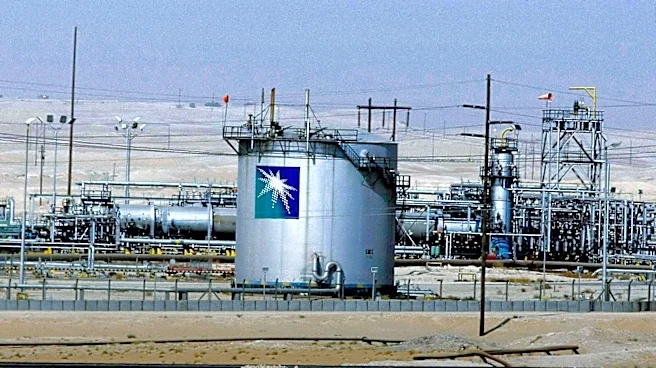
Baghdad and Ankara have signed a one-year interim agreement allowing Iraq to export oil through the Iraq-Turkey Pipeline (ITP) corridor. This deal, signed on August 1, 2026, aims to facilitate the movement of 750,000 barrels per day (bpd) of Iraqi crude,
significantly higher than the current 170,000-200,000 bpd level. The agreement comes after a two-and-a-half-year halt in oil flows due to a legal dispute, where Turkey was ordered to pay Baghdad $1.5 billion for breaching a previous pipeline agreement. The new deal is crucial for Iraq, which relies heavily on oil exports for its budget, especially as the Strait of Hormuz remains blockaded. The agreement also highlights ongoing tensions between Baghdad and the Kurdistan Region of Iraq over independent oil sales, a core issue in their relations since 2014.
Why It's Important?
This agreement is significant as it temporarily resolves a major export challenge for Iraq, a key oil producer. The deal allows Iraq to bypass the Strait of Hormuz, a critical chokepoint, and access European and American markets directly. This is particularly important given the current geopolitical climate, where Western markets are seeking alternatives to Russian oil. However, the deal's temporary nature underscores the fragility of Iraq-Turkey relations and the broader geopolitical tensions involving Western powers, China, and Russia. The agreement's success or failure could impact global oil markets and the strategic balance in the Middle East.
What's Next?
The future of this agreement is uncertain, as Turkey has indicated it may not extend the deal if its demands for further joint ventures and compensation are not met. The geopolitical stakes are high, with the U.S. and EU playing key roles in facilitating the deal. The outcome will likely influence Iraq's internal politics, particularly its relations with the Kurdistan Region, and could affect broader regional dynamics involving major powers like China and Russia.
Beyond the Headlines
The deal reflects deeper geopolitical shifts, with Russia and China aiming to diminish Western influence in the Middle East by excluding them from energy deals. This strategic maneuvering could have long-term implications for global energy markets and international relations. Additionally, the ongoing dispute over Kurdish oil sales highlights the complex interplay of regional autonomy and national sovereignty in Iraq, a dynamic that could influence future political developments in the region.