



What's Happening?
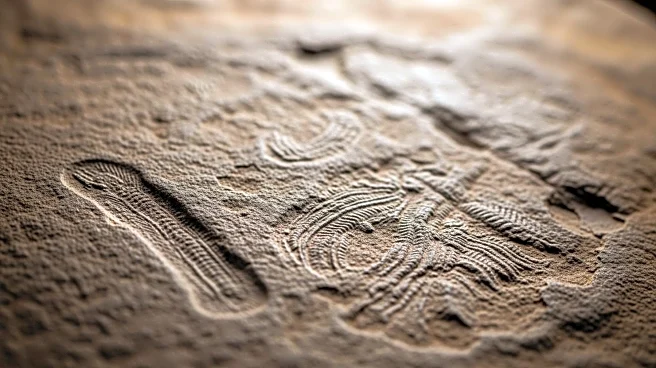
Researchers from Memorial University in Newfoundland, Canada, have discovered a 551-million-year-old site named Inner Meadow, which contains a well-preserved and diverse fossil assemblage. This finding suggests that the Avalon biota, a group of early
complex life forms, survived longer than previously thought. The study challenges the understanding of the first Phanerozoic mass extinction event, known as the Kotlin Crisis, which was believed to have caused the extinction of around 80% of known macroorganisms. The new data indicates that the Avalon Assemblage spans the entire interval of the White Sea Assemblage, marking a significant increase in biodiversity loss at the 550 Ma extinction event.
Why It's Important?
The discovery of the Inner Meadow site provides new insights into the history of early complex life on Earth. By extending the timeline of the Avalon biota, the study challenges previous assumptions about the severity and timing of the Kotlin Crisis, the first known mass extinction event. This has implications for understanding the resilience and adaptability of early life forms in the face of environmental changes. The findings could lead to a reevaluation of the factors that contributed to the extinction events and the evolutionary pathways of early organisms, offering a deeper understanding of the history of life on Earth.