






What's Happening?
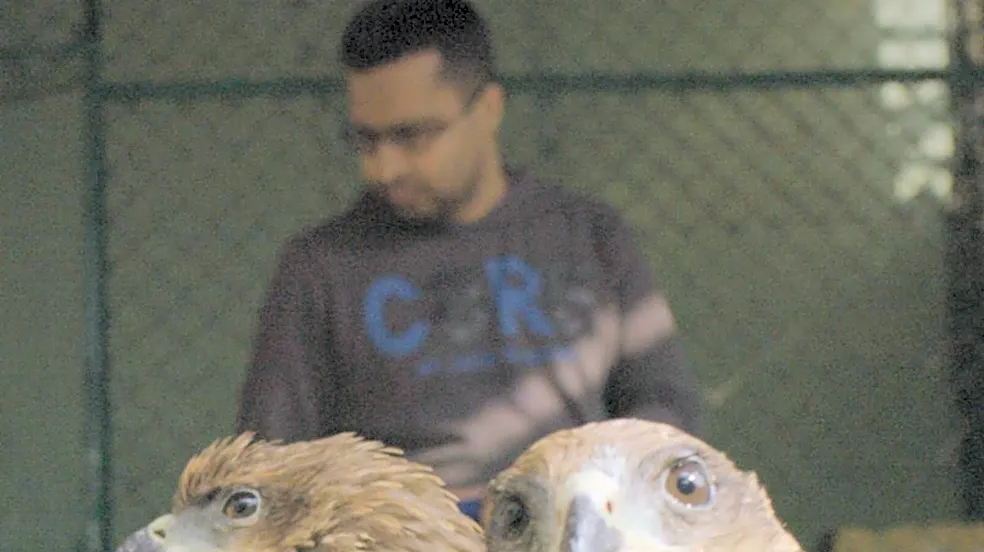
Fred Homer, an 87-year-old licensed bird rehabilitator in Williamsville, Vermont, has spent over four decades healing injured birds in his backyard. His passion for avian welfare stems from a childhood memory 80 years ago in New Jersey, where he was prevented
from helping an injured bird on the road, an incident that deeply affected him. Homer, a former teacher, has since attempted to save over 4,000 birds, transforming his barn and even his kitchen into a sanctuary for various species, including a crow named Jasper and a blind Barred owl named Stella. His wife, Debbie Fiener, supports his extensive efforts. Homer views his work as a way to make the most of life, a philosophy reinforced by a coffin he built 20 years ago as a daily reminder of life's preciousness. He anticipates releasing Jasper the crow soon, as the bird has recovered from its distress.
Why It's Important?
Homer's long-standing dedication highlights the significant role individual citizens play in local wildlife conservation and rehabilitation efforts across the U.S. His story underscores the impact of personal commitment on animal welfare, particularly for vulnerable wildlife. Such efforts often fill gaps in formal conservation programs, providing critical care for injured animals that might otherwise perish. This work also serves as an educational example, raising public awareness about the importance of protecting local ecosystems and the creatures within them. The emotional connection people form with wildlife, as exemplified by Homer's lifelong mission, can inspire broader community engagement in environmental stewardship and support for wildlife rehabilitation centers, which are often volunteer-driven and resource-limited.
What's Next?
Fred Homer plans to continue his bird rehabilitation work as long as he is able, with the immediate goal of releasing Jasper the crow once it is strong enough. His ongoing efforts will likely involve caring for new injured birds brought to his attention, maintaining his backyard sanctuary, and potentially inspiring others in his community to engage in similar conservation activities. While no formal succession plan is mentioned, his story could encourage younger generations or local volunteers to learn about bird rehabilitation, ensuring that such dedicated care continues in the future. The local community may also continue to support his work through donations or by bringing injured birds to him, recognizing his expertise and commitment.
Beyond the Headlines
Homer's story transcends simple animal care, touching upon themes of lifelong purpose, the profound impact of childhood experiences, and a unique perspective on mortality. His daily interaction with a self-built coffin serves as a powerful, personal memento mori, driving his philosophy to 'exploit this day and don’t let it slip by.' This approach suggests a deeper connection between his awareness of life's finitude and his tireless dedication to preserving life in other forms. It highlights how personal philosophies can translate into tangible, altruistic actions that benefit the natural world. His work also subtly critiques modern society's detachment from nature, advocating for a more hands-on, compassionate engagement with the environment and its inhabitants.