
What's Happening?
The Thwaites Glacier in Antarctica, often referred to as the 'Doomsday Glacier,' is experiencing significant structural weakening, according to a study by the International Thwaites Glacier Collaboration.
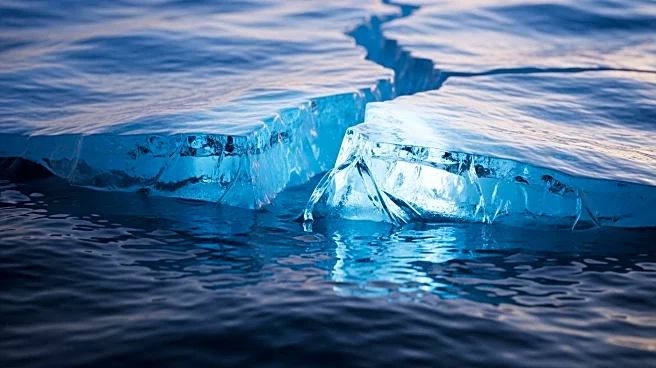
Researchers from the University of Manitoba have tracked the formation and propagation of cracks in the glacier's ice shelf from 2002 to 2022. The study reveals that the total length of cracks has increased from 165 km in 2002 to 336 km in 2021, with a notable rise in smaller cracks. This structural degradation is attributed to the glacier's interaction with fast-moving ocean currents and the collapse of the shear zone between the ice shelf and the Western ice tongue. The weakening of the ice shelf has accelerated the upstream flow of ice, posing a risk of increased sea level rise.
Why It's Important?
The structural weakening of the Thwaites Glacier is a critical concern for global sea level rise predictions. As the glacier destabilizes, it could lead to significant ice loss, contributing to rising sea levels that threaten coastal communities worldwide. The feedback loop identified in the study, where cracks accelerate ice flow and vice versa, highlights the urgency of monitoring and understanding these changes. The potential collapse of the glacier could have far-reaching impacts on global climate patterns and necessitate adaptive measures for affected regions.
What's Next?
Continued monitoring and research are essential to predict the glacier's future behavior and its impact on sea levels. The International Thwaites Glacier Collaboration will likely focus on further understanding the feedback mechanisms and structural changes. Policymakers and environmental agencies may need to prepare for potential scenarios involving significant sea level rise, which could affect infrastructure, ecosystems, and human settlements.
Beyond the Headlines
The situation with the Thwaites Glacier underscores the broader implications of climate change and the need for international cooperation in climate science. The glacier's changes serve as a stark reminder of the interconnectedness of global systems and the potential for rapid environmental shifts. This development may also influence public policy and climate action initiatives, emphasizing the importance of reducing greenhouse gas emissions and investing in sustainable practices.