






What's Happening?
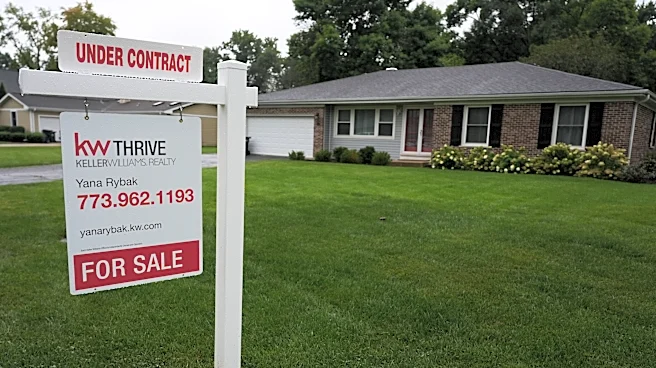
U.S. housing affordability is currently at one of its worst levels since the global financial crisis, with the market described as 'frozen' by J.P. Morgan analysts. This situation is primarily driven by persistently high mortgage rates, a significant
shortage of available homes, and stagnant income growth. John Sim, Head of Securitized Products Research at J.P. Morgan, noted that the cost for a renter to purchase a median-priced home now consumes approximately 50% of the median income, a stark contrast to the 20% to 25% for existing mortgage holders with lower rates. Mortgage purchase applications have plummeted to their lowest point since 1995, representing a 50% drop from their peak during the pandemic. The typical monthly mortgage payment, including taxes and insurance, stands at about $2,800, consuming roughly 38% of a typical household's gross income. Additionally, the U.S. faces a structural shortage of about 1.2 million homes, with the deficit particularly acute in the Northeast and Middle America.
Why It's Important?
The near-crisis level of housing affordability has profound implications for the U.S. economy and society. The 'frozen' market significantly hinders homeownership, especially for younger generations; the homeownership rate among those under 35 has fallen to a nine-year low of 35%. This trend exacerbates wealth inequality and limits opportunities for intergenerational wealth transfer. The disparity between income growth (0.4% annualized over 25 years) and the rise in home prices (1.7%) and rents (2%) indicates a systemic issue where housing costs are increasingly out of reach for many. The 'lock-in effect,' where a large percentage of current homeowners have mortgage rates below 5%, discourages them from selling, further constricting housing supply and reducing market mobility. This lack of mobility can stifle economic dynamism, as people are less able to move for job opportunities or better living conditions, impacting labor markets and regional economic growth.
What's Next?
Addressing the current housing affordability crisis will require multifaceted solutions. While the immediate future suggests continued challenges due to high mortgage rates and limited supply, potential next steps could involve policy interventions aimed at increasing housing inventory, such as incentivizing new construction and streamlining regulatory processes. Efforts to support first-time homebuyers and address the 'lock-in effect' through innovative financial products or incentives might also emerge. Furthermore, continued advocacy for wage growth that keeps pace with housing costs will be crucial. The long-term outlook depends on a combination of market adjustments, such as a potential moderation in interest rates, and sustained policy efforts to expand affordable housing options and improve housing accessibility across different income brackets and demographics. Without significant changes, the housing market is likely to remain challenging for prospective buyers and renters.
Beyond the Headlines
The 'frozen' housing market and declining affordability are not merely economic statistics; they represent a significant social challenge impacting the quality of life and future prospects for millions of Americans. The inability to afford a home can lead to increased financial stress, reduced savings, and delayed life milestones such as starting families. The concentration of housing deficits in certain regions also highlights geographical disparities in economic opportunity and livability. This crisis could deepen existing social divides, as access to stable and affordable housing becomes a privilege rather than a widespread possibility. The long-term implications include potential shifts in demographic patterns, increased demand for rental properties, and a growing need for social safety nets to support those priced out of the housing market. The situation calls for a re-evaluation of urban planning, zoning laws, and economic policies to ensure that housing remains accessible and equitable for all segments of the population.