







What's Happening?
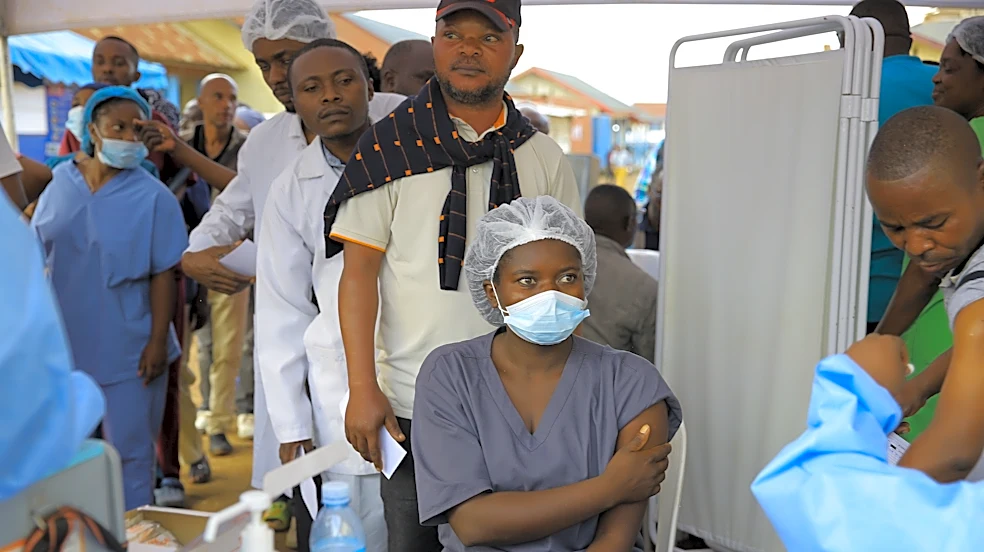
The World Health Organization (WHO) has granted Emergency Use Listing (EUL) for the BIOFIRE® Global Fever Special Pathogens Panel, developed by BioFire Defense, LLC, a bioMérieux company. This listing aims to expand access to differential diagnostic testing
for the ongoing Ebola Bundibugyo outbreak affecting the Democratic Republic of the Congo (DRC) and neighboring countries. The panel is FDA-cleared and recommended by the U.S. Centers for Disease Control and Prevention (CDC) for the current outbreak response. It can simultaneously test for 16 pathogens from a single whole blood sample in approximately one hour, including multiple Ebola viruses (specifically Bundibugyo ebolavirus), malaria parasites, Marburg virus, West Nile virus, and Lassa virus. This capability helps differentiate Ebola from other acute febrile illnesses with similar symptoms, supporting faster clinical decision-making and more effective resource allocation.
Why It's Important?
The WHO's EUL for the BIOFIRE® Global Fever Special Pathogens Panel is a significant development for global health security and directly impacts U.S. preparedness and response capabilities. By providing a rapid and comprehensive diagnostic tool, it enhances the ability of healthcare professionals to quickly identify and differentiate highly pathogenic diseases like Ebola from other febrile illnesses. This is crucial for containing outbreaks, preventing wider transmission, and protecting healthcare workers. For the U.S., which often provides humanitarian aid and medical expertise during international health crises, having an FDA-cleared and CDC-recommended diagnostic tool with WHO EUL streamlines deployment and ensures interoperability with international response efforts. Furthermore, the panel's ability to detect a range of pathogens, including West Nile virus, reinforces its utility in broader infectious disease surveillance and biothreat preparedness, aligning with national security interests in preventing the spread of dangerous pathogens.
What's Next?
With the WHO EUL, the BIOFIRE® Global Fever Special Pathogens Panel will become more accessible to health authorities, international organizations, and procurement partners involved in the Ebola response and future preparedness efforts. BioMérieux is expected to continue expanding manufacturing capacity, accelerating deliveries of instruments and tests, and providing training and on-site support to laboratory professionals in affected regions. The panel's deployment will likely be integrated into existing diagnostic capabilities in countries like the DRC, Rwanda, and Uganda to support molecular differential testing for suspected cases. This will facilitate faster patient management, contact tracing, and resource allocation. The EUL also serves as a benchmark for other diagnostic tools, potentially encouraging further innovation in rapid, multiplex pathogen detection for emerging infectious diseases.
Beyond the Headlines
The development and deployment of advanced diagnostic tools like the BIOFIRE® Global Fever Special Pathogens Panel highlight the critical role of technological innovation in global health security. Beyond immediate outbreak response, such panels contribute to strengthening long-term surveillance systems and laboratory capacity in vulnerable regions, which is essential for early detection of future health threats. The inclusion of multiple pathogens in a single test also reflects a shift towards a more holistic approach to febrile illness diagnosis, moving beyond single-disease focus. Ethically, expanding access to rapid diagnostics in resource-limited settings is crucial for health equity, ensuring that all populations have the tools to combat infectious diseases effectively. This also underscores the importance of public-private partnerships in developing and deploying such technologies, as companies like bioMérieux collaborate with international bodies and national governments to address complex global health challenges.