



What's Happening?
Israel is facing a critical decision point in its energy strategy due to a significant surge in energy prices, triggered by Iran's blockade of the Strait of Hormuz and the shutdown of natural gas facilities in Qatar. This situation has led to a dramatic
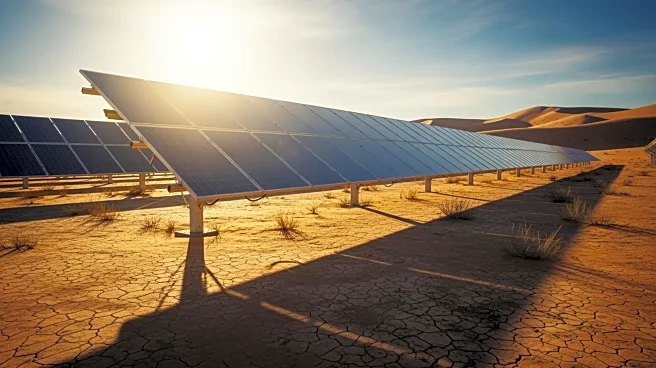
increase in global gas and oil prices, with spikes reaching up to 68%. In response, Israel is considering a shift from its current reliance on centralized natural gas to a more decentralized energy model focused on solar power. The proposed strategy includes transforming industrial rooftops, public buildings, and parking lots into power plants, and deploying Agro-PV technologies in agricultural lands. This approach aims to reduce dependency on the national grid and enhance energy resilience by creating microgrids for critical infrastructure like hospitals and military bases.
Why It's Important?
The shift towards decentralized solar energy in Israel is significant as it could reduce the country's dependency on fossil fuels and enhance its energy security. By adopting solar-based technologies, Israel could position itself as a global leader in renewable energy, potentially exporting technological solutions rather than natural gas. This transition could weaken the geopolitical influence of countries that rely on fossil fuel exports, thereby altering the global energy landscape. For Israel, this move is not only an economic opportunity but also a strategic necessity to ensure national security and operational continuity in the face of regional tensions.
What's Next?
Israel's energy transition plan involves immediate action to build resilience by design, moving away from long-term planning. The government is expected to establish a National Energy Security Authority to oversee and expedite decentralization projects, bypassing regulatory hurdles. This authority would prioritize national strategic needs over local politics, ensuring the swift implementation of energy projects. As Israel advances its solar energy capabilities, it may also seek to form international partnerships to export its technological expertise, further solidifying its position as a leader in the global renewable energy sector.