




What's Happening?
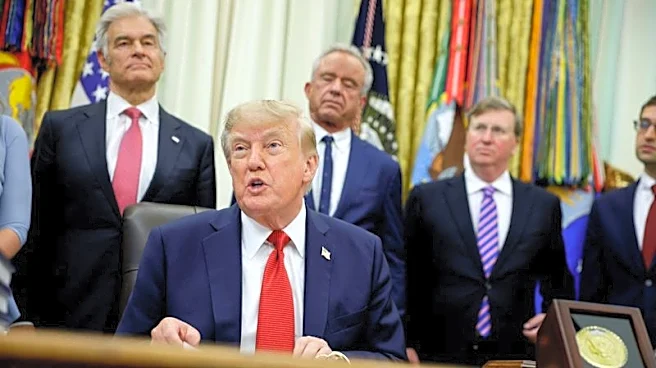
President Trump has publicly criticized Pennsylvania Governor Josh Shapiro, labeling him as 'close to incompetent' in response to the ongoing measles outbreak in Pennsylvania. This comes as Pennsylvania reports the highest number of measles cases in the U.S.
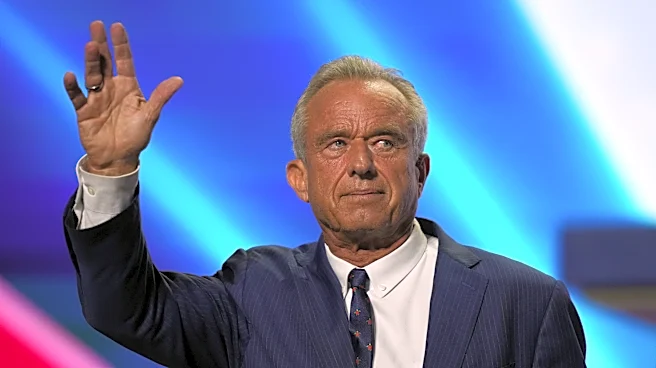
this year. Health and Human Services Secretary Robert F. Kennedy Jr. has also stated that Governor Shapiro initially refused assistance from the Centers for Disease Control and Prevention (CDC), which Kennedy claims has successfully contained outbreaks in other states like South Dakota and Texas. Governor Shapiro, in turn, has accused Kennedy of spreading 'conspiracy theories' after the CDC did not include four reported measles-associated deaths in its national statistics. Pennsylvania Secretary of Health Debra Bogen has since written to the CDC, requesting help but stipulating that the CDC must publicly acknowledge the reported deaths in Pennsylvania.
Why It's Important?
This public dispute between President Trump and Governor Shapiro, alongside comments from Secretary Kennedy, highlights a significant political and public health challenge during a measles outbreak. The disagreement over the CDC's involvement and the acknowledgment of measles-associated deaths could undermine public trust in health authorities and complicate efforts to control the spread of the disease. The politicization of public health responses can lead to confusion among the public regarding vaccination efforts and preventative measures. Furthermore, the refusal of federal assistance, as alleged by Secretary Kennedy, could prolong the outbreak in Pennsylvania, potentially leading to more cases and further strain on the state's healthcare system. The demand for public recognition of deaths by Pennsylvania's health secretary underscores a broader concern about transparency and data reporting in national health crises.
What's Next?
The immediate next steps will likely involve continued negotiations and communications between Pennsylvania's Department of Health and the CDC regarding the terms of federal assistance and the public acknowledgment of measles-associated deaths. The CDC is expected to update its website with information on the deaths once it receives the necessary data. The political rhetoric surrounding the outbreak may intensify, especially given President Trump's public criticism and Governor Shapiro's counter-accusations. Public health officials in Pennsylvania will continue their efforts to contain the outbreak, potentially with or without full federal cooperation, depending on the resolution of the current dispute. The situation could also prompt further public debate on the roles of state and federal governments in managing public health emergencies and the importance of non-partisan collaboration.
Beyond the Headlines
The ongoing conflict between state and federal officials during a public health crisis reveals deeper issues concerning federalism and the coordination of health responses in the U.S. The dispute over data reporting and the politicization of health information can erode public confidence in institutions vital for national well-being. This incident could set a precedent for how future health emergencies are managed, potentially influencing policies on inter-governmental cooperation and data transparency. It also underscores the challenge of maintaining a unified public health message when political figures are at odds, which can have long-term consequences for public health outcomes and the effectiveness of disease prevention campaigns. The emphasis on 'conspiracy theories' by Governor Shapiro also points to the growing challenge of misinformation in public discourse, particularly in health-related matters.