

What's Happening?
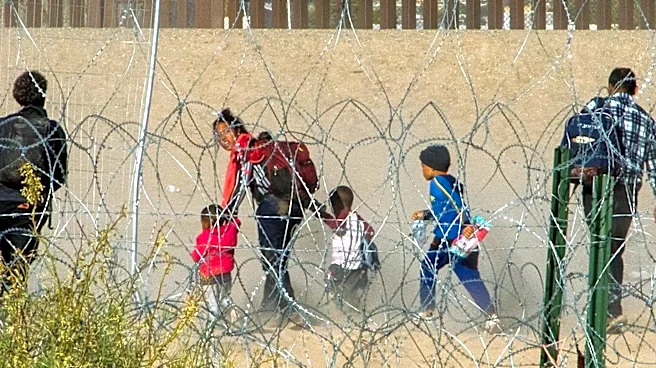
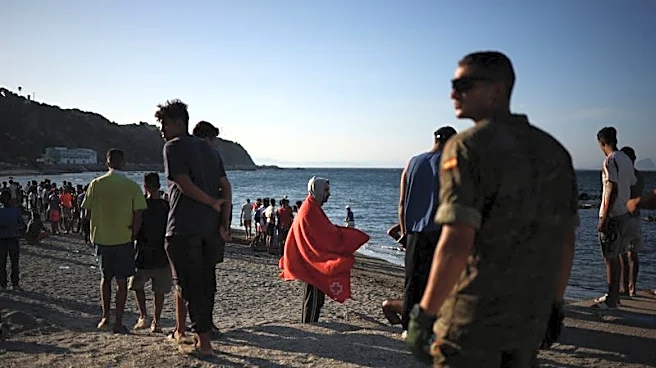
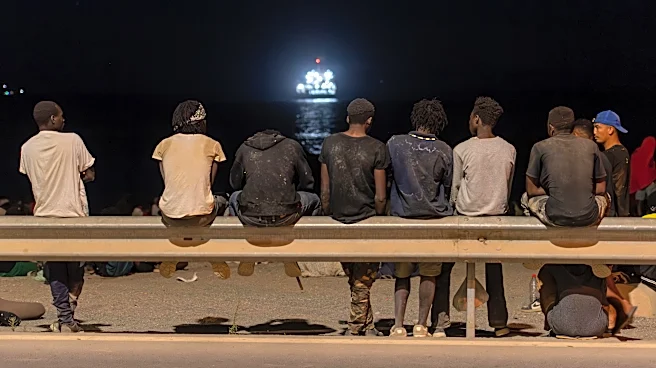
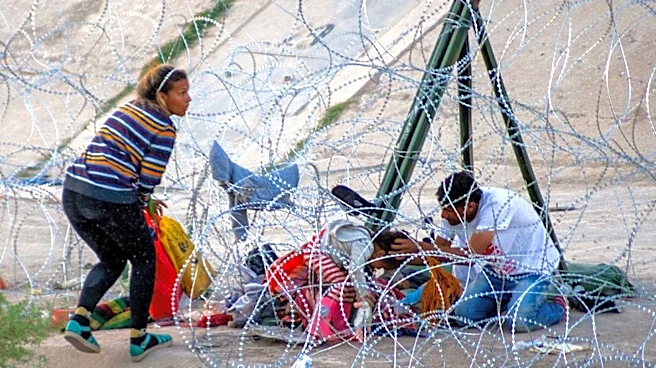
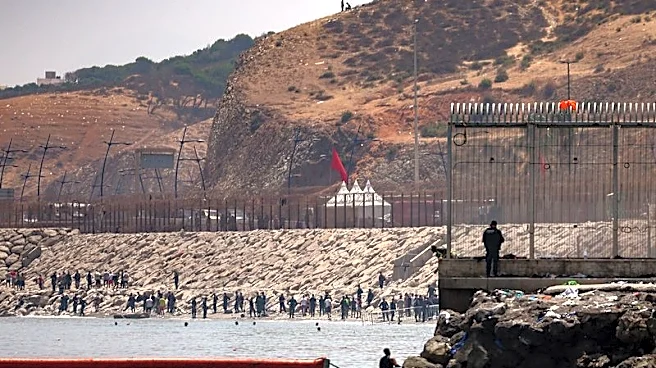
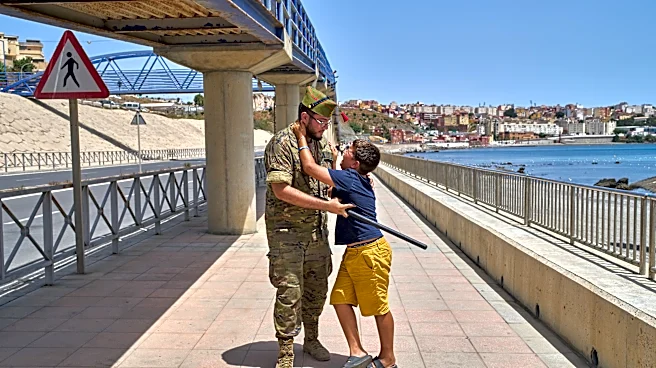
The leader of Ceuta, a Spanish territory in North Africa, has declared the situation with child migrants as 'unsustainable' following a recent influx from Morocco. Approximately 2,500 migrants remain in Ceuta, including hundreds of unaccompanied minors,
after a sudden rush of 72,000 people last week. The local government, led by Juan Jesus Vivas of the Popular Party, is struggling to provide adequate care for these children, with facilities designed for 90 now housing 1,100. The Spanish government has announced emergency funding of 25 million euros to assist Ceuta, but the redistribution of minors to other regions faces resistance from some political parties.
Why It's Important?
This crisis highlights ongoing tensions within the European Union regarding immigration policy and the handling of migrant influxes. The situation in Ceuta underscores the challenges faced by border regions in managing sudden increases in migrant populations, particularly vulnerable groups like unaccompanied minors. The response from the Spanish government and the EU could set precedents for future migration crises, impacting political dynamics and humanitarian policies across the region. The resistance from certain political factions also reflects broader debates on immigration within Europe.
What's Next?
The Spanish government and Ceuta authorities are likely to continue negotiations on how to manage the current situation and prevent future crises. The involvement of EU institutions may be necessary to coordinate a broader response, potentially involving the redistribution of migrants across member states. Political debates within Spain and the EU could intensify, influencing upcoming elections and policy decisions. The situation may also prompt discussions on improving border security and migrant processing facilities.