




What's Happening?
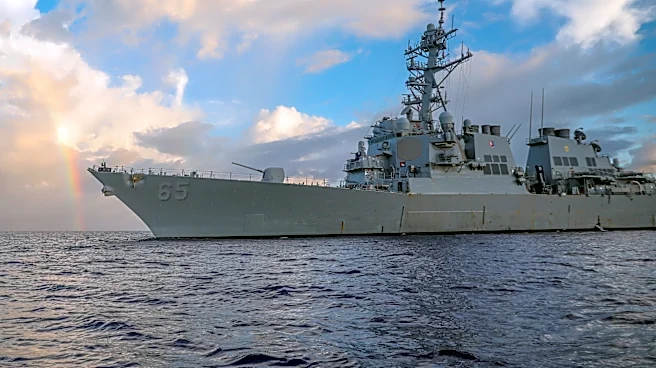
The Pentagon is evaluating a potential withdrawal or repositioning of American forces from the Persian Gulf due to Iranian missile and drone attacks that have damaged critical U.S. bases. This assessment, described as 'prudent planning,' aims to determine
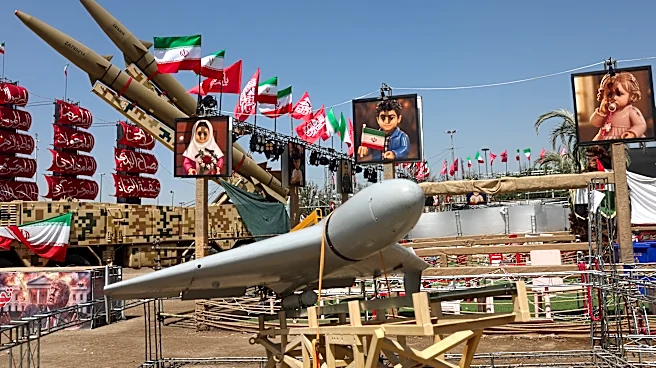
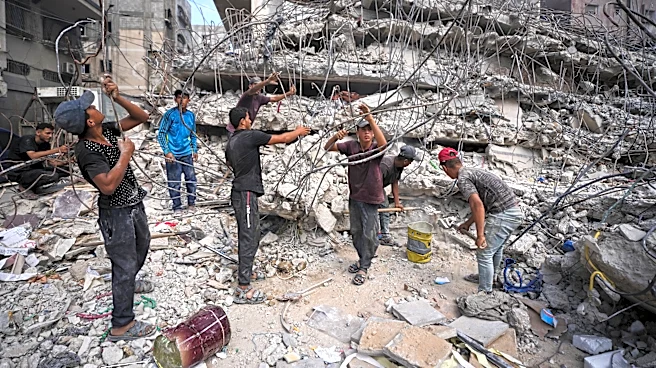
whether damaged facilities should be rebuilt, reduced, or abandoned. The deliberations could lead to a westward shift of troops, aircraft, air-defense systems, and command infrastructure, moving away from concentrated installations near Iran towards a distributed military network extending through Jordan, Israel, and Saudi Arabia’s Red Sea coast. During the conflict, Iranian attacks damaged or destroyed over 200 structures and equipment across approximately 15 American military sites, resulting in six American service members killed in Kuwait and further attacks in Jordan. American forces expended more than 1,000 Patriot and THAAD interceptors, highlighting the strategic cost imbalance and the vulnerability of fixed installations to sustained saturation attacks.
Why It's Important?
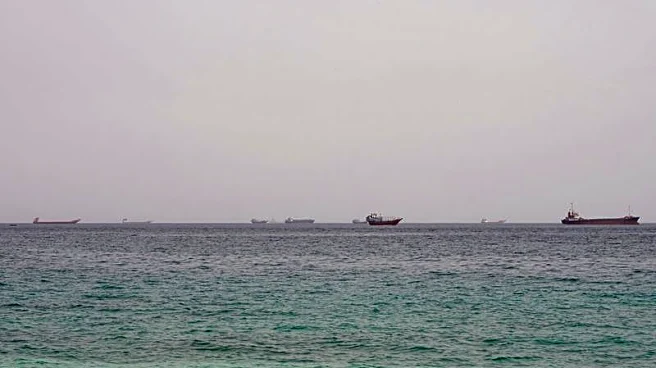
This potential restructuring of U.S. military presence in the Persian Gulf carries significant implications for deterrence against Iran, the protection of Gulf allies, and maritime security around the Strait of Hormuz. The expenditure of costly and production-constrained interceptors, such as Patriot and THAAD missiles, reveals a strategic vulnerability where Iran can impose substantial costs using comparatively expendable missiles and drones. This imbalance forces U.S. commanders to make difficult choices regarding interception priorities and risks exhausting strategically scarce missile-defense inventories. A repositioning could reduce immediate exposure to shorter-range Iranian weapons but might also lengthen response times for operations in the Persian Gulf. Gulf allies, who have historically relied on visible American deployments for both military reinforcement and political assurance, face a potential 'deterrence vacuum' and a 'sovereignty dilemma,' as a reduced U.S. presence could leave them more exposed and potentially lead them to seek alternative security partners.
What's Next?
While no formal review or final decision has been announced, the ongoing deliberations suggest that significant changes to the U.S. force posture in the Middle East are under serious consideration. Any permanent changes would require senior approval, negotiations with host nations, and detailed operational analysis. The most likely outcome could be a combination of selective reconstruction and dispersal, where essential headquarters and logistics functions remain regionally accessible, but vulnerable personnel and equipment rotate through smaller, hardened locations. The U.S. will need to balance survivability against combat responsiveness, ensuring that any repositioning preserves credible combat power. Gulf governments will likely respond by either deepening independent defense programs or diversifying relationships with other global powers, potentially altering the regional security landscape. The Pentagon will also need to consider the financial costs of reconstruction versus investing in homeland defense or reinforcing deterrence against China in the Indo-Pacific.
Beyond the Headlines
The Iranian attacks have fundamentally altered American basing calculations, forcing Washington to reconcile Gulf deterrence, force protection, and Indo-Pacific priorities within finite resources. This situation underscores the evolving nature of modern warfare, where adversaries can exploit technological asymmetries to challenge traditional military advantages. The concept of 'magazine depth' has emerged as a central measure of deterrence, highlighting that an adversary can achieve strategic effects by outlasting a defender's interceptor inventory. Ethically, the repositioning raises questions about the U.S.'s long-term commitment to its allies and the potential for increased regional instability if a perceived vacuum is created. Culturally, it could shift perceptions of U.S. power and influence in the Middle East, potentially empowering regional actors and reshaping geopolitical dynamics. The strategic shift also reflects a broader U.S. pivot towards great power competition, particularly with China, necessitating a reallocation of military assets and attention away from prolonged engagements in the Middle East.