
What's Happening?
President Donald Trump is set to chair the inaugural meeting of the Board of Peace in Washington, D.C., on February 19. The meeting, described as a fundraising conference, aims to gather international
leaders to discuss the reconstruction of the Gaza Strip and broader global conflicts. The Board of Peace, launched by Trump in late January, has expanded its mission beyond Gaza to address global issues. The meeting's agenda and participation remain tentative, with the U.S. Institute of Peace, now known as the Donald J. Trump U.S. Institute of Peace, as the planned venue. The initiative has received mixed reactions, with some Middle Eastern countries accepting invitations, while many Western allies remain skeptical. The initiative's relationship with established multilateral institutions like the United Nations is under scrutiny.
Why It's Important?
The Board of Peace represents a significant U.S. diplomatic effort under President Trump to influence global conflict resolution. Its establishment could reshape international cooperation dynamics, particularly if it gains traction as an alternative to the United Nations. The initiative's success or failure could impact U.S. foreign policy and its relationships with both Middle Eastern and Western countries. The involvement of high-profile figures like Jared Kushner and Tony Blair underscores the initiative's potential influence. However, the skepticism from traditional allies highlights concerns about the U.S. potentially bypassing established international frameworks, which could lead to geopolitical tensions.
What's Next?
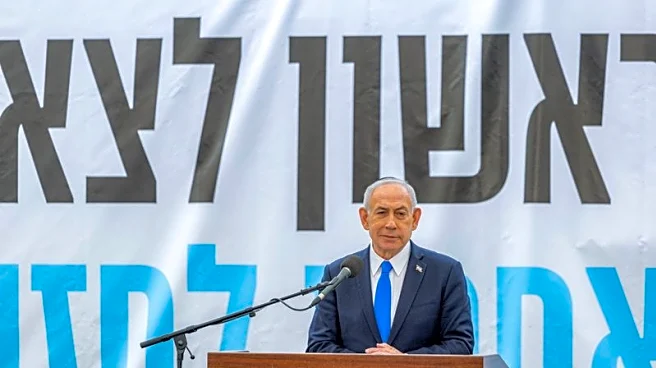
The upcoming meeting will likely clarify the Board of Peace's objectives and the level of international support it can muster. The participation of key global leaders and the outcomes of discussions on Gaza's redevelopment will be critical in determining the initiative's future. The meeting between President Trump and Israeli Prime Minister Benjamin Netanyahu on February 18 may also influence the proceedings. Observers will be watching for any shifts in U.S. foreign policy and the potential impact on existing international institutions.