




What's Happening?
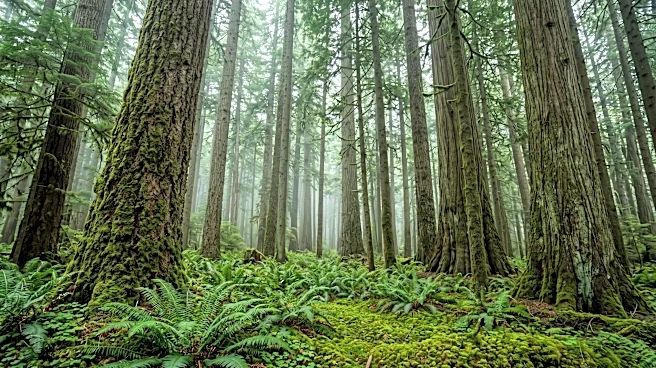
Washington Public Lands Commissioner Dave Upthegrove has revised his goal for protecting older state forests from timber harvest, lowering the target from 77,000 acres to 55,000 acres. This adjustment, announced on Thursday, is partly attributed to mapping
errors, with many previously included parcels being small or already protected. The 55,000 acres now exempt from logging through 2030 were originally slated for harvest after that year. Upthegrove is urging the state Legislature to grant the Department of Natural Resources (DNR) broader authority to generate revenue from state lands through means other than logging. He proposes alternatives such as leasing older forests to municipalities, tribes, or nonprofits, and exploring participation in regulatory carbon markets, similar to how private timber companies like Weyerhaeuser generate revenue. The Commissioner also highlighted the DNR's internal budget problems, noting that a key account for forestry work was projected to go negative, leading to deferred work on some lands.
Why It's Important?
This development is significant for Washington State's environmental policy, land management, and public finance. The reduction in protected forest acreage, even if due to mapping corrections, raises concerns among conservationists who advocate for more aggressive protection of 'legacy forests.' The Commissioner's push for legislative changes to diversify DNR's revenue streams is crucial, as the current reliance on logging has led to a 'financial crisis' for over a decade, according to Upthegrove. Shifting towards conservation easements and carbon markets could provide a more sustainable financial model for managing state lands, benefiting schools, counties, and other government entities that rely on trust land revenue. The timber industry, however, views the agency's logging performance as the primary issue, noting a 27% shortfall in targeted harvest during the last fiscal year. This divergence highlights the ongoing tension between economic interests tied to timber extraction and environmental goals of forest conservation.
What's Next?
Commissioner Upthegrove plans to present a proposal for conservation easements to the Board of Natural Resources for consideration in the spring. He will continue to advocate for legislative approval to broaden the DNR's revenue-generating authority, which has been a recurring request for over two decades. The agency is also actively evaluating state forest lands for potential carbon projects to be ready once the necessary authority is secured. The Legislature's response to these proposals will determine the future financial stability of the DNR and the long-term conservation strategy for Washington's state forests. Conservation groups, such as the Legacy Forest Defense Coalition, are likely to continue monitoring and engaging with these legislative efforts, potentially intensifying their advocacy for greater forest protection. The timber industry will also likely maintain its focus on the agency's logging output and financial management.
Beyond the Headlines
The debate over Washington's state forests reflects a broader national challenge in balancing economic development, environmental conservation, and sustainable resource management. The Commissioner's efforts to move away from a sole reliance on logging revenue for trust lands could set a precedent for other states facing similar dilemmas. The exploration of carbon markets as a revenue source for public lands highlights an evolving understanding of forests as valuable assets for climate change mitigation, not just timber production. This shift could lead to new economic models that incentivize ecological services. However, the resistance from some conservationists, who feel the pace of change is too slow, and the timber industry's focus on logging targets, underscore the deep-seated and often conflicting interests involved in land use policy. The long-term success of these initiatives will depend on overcoming systemic inertia and fostering collaboration among diverse stakeholders.