


What's Happening?
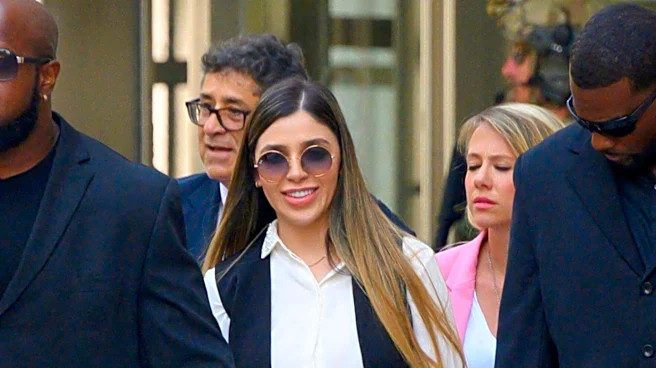
Emma Coronel, wife of Joaquín 'El Chapo' Guzmán, has stated that their twin daughters, María Joaquina and Emali Guadalupe, continue to have communication with their father, who is incarcerated at the ADX Florence maximum-security prison in Colorado. This
declaration was made during a Kick transmission and has drawn attention due to previous judicial documents indicating that phone calls between Guzmán and his family were canceled in 2023. Guzmán himself has sent letters to U.S. authorities requesting changes to his incarceration conditions and the ability to see his family. Coronel emphasized that the relationship between her daughters and Guzmán remains strong, despite public perceptions and news reports suggesting otherwise. She did not specify the exact method of communication, whether through authorized phone calls, video calls, letters, or family visits.
Why It's Important?
This development is significant as it highlights the ongoing efforts by 'El Chapo' Guzmán's family to maintain ties despite the stringent security measures and isolation imposed on him in a U.S. federal prison. The assertion of continued communication, even without details, raises questions about the effectiveness and enforcement of prison restrictions on high-profile inmates. For U.S. authorities, it could prompt a review of communication protocols for inmates in supermax facilities, especially concerning family contact. The public perception of 'El Chapo' and his family is often shaped by media narratives, and Coronel's statements challenge these, potentially influencing public opinion regarding the treatment of incarcerated individuals and their rights to family contact. It also underscores the enduring human element within the context of severe criminal justice outcomes.
What's Next?
It is likely that Emma Coronel's statements will lead to increased scrutiny from both the public and potentially U.S. prison authorities regarding the nature and extent of 'El Chapo' Guzmán's communication with his family. While Coronel did not provide specifics, her claims could prompt official inquiries into how such contact is maintained given the documented restrictions. Guzmán has repeatedly petitioned U.S. judicial authorities for changes to his conditions, including requests for release, a new trial, and even extradition to Mexico. These requests have been denied, but his continued appeals, coupled with his family's public statements, suggest ongoing legal and public relations efforts to alter his situation. Future developments may include further legal filings from Guzmán or official responses from prison authorities regarding his communication privileges.
Beyond the Headlines
The situation surrounding 'El Chapo' Guzmán's family contact delves into the complex ethical and legal dimensions of incarceration, particularly for high-profile inmates. The right to family communication, even for convicted criminals, is a recognized aspect of human rights, though it is often balanced against security concerns and the punitive nature of imprisonment. Coronel's public statements, made through social media, also highlight the evolving role of digital platforms in shaping narratives around legal and criminal justice issues. This case could contribute to broader discussions about prison reform, the psychological impact of extreme isolation on inmates, and the balance between punishment and rehabilitation. It also subtly underscores the enduring influence of figures like 'El Chapo' even from behind bars, as their personal lives and family connections continue to draw public interest and media attention.