





What's Happening?
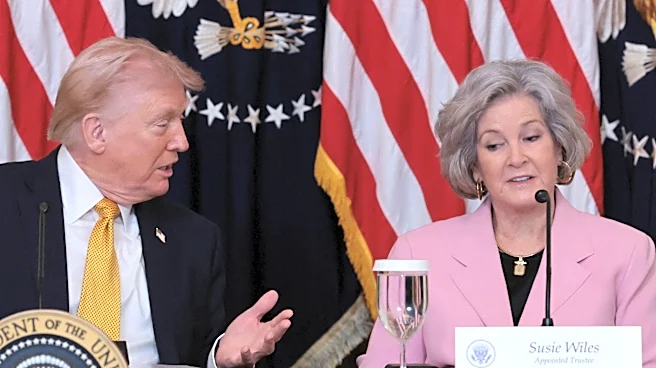
The U.S. Senate Special Committee on Aging recently held the first-ever dedicated congressional hearing on menopause, a transition affecting 75 million American women. Senator Kirsten Gillibrand (Democrat — New York), the committee's ranking member, highlighted
the significant care gap, calling it a 'healthcare failure, an economic failure and a policy failure.' The hearing aimed to propose solutions to address the unmet needs of the 6,000 American women who enter menopause daily. A recent Mayo Clinic study estimates that untreated menopause costs the U.S. $26.6 billion annually, with $1.8 billion attributed to lost work time. The committee, led by Senator Rick Scott (Republican — Florida), submitted a bipartisan letter to the U.S. Government Accountability Office (GAO) outlining care gaps and recommending policy changes. Four leading menopause experts testified, focusing on improving access to care, enhancing doctor's education, and increasing research into women's midlife health. Key issues discussed included long wait times for OB-GYN appointments, estrogen patch shortages, high prescription costs, and low insurance reimbursements. Experts also noted that 80% of OB-GYN residents feel unprepared to discuss menopause, and less than one-third of residency programs cover perimenopause and menopause.
Why It's Important?
This historic hearing marks a significant step towards recognizing and addressing a long-neglected area of women's health in the United States. The economic impact alone, with billions lost annually due to untreated menopause and women leaving the workforce, underscores the urgency of the issue. The lack of adequate medical training for doctors and insufficient federal research funding (less than 1% of federal research budgets allocated to midlife women's health) contribute to a system where many women are forced to rely on unreliable sources for information. By bringing these issues to the forefront, Congress is acknowledging the systemic failures in healthcare provision for menopausal women. Improving access to care, enhancing medical education, and increasing research funding could lead to better health outcomes for millions of women, reduce healthcare costs, and prevent women from prematurely exiting the workforce. This initiative has the potential to reshape public health policy and medical practices related to women's midlife health, fostering a more supportive and informed healthcare environment.
What's Next?
The hearing highlighted several existing bills in Congress that could be supported to improve menopause care. These include S.4246: Advancing Menopause Care and Mid-Life Women’s Health Act, which aims to increase research funding, improve medical training, and expand public health awareness; S.1320: Servicewomen and Veterans Menopause Research Act, requiring the U.S. Department of Veterans Affairs to study and improve menopause care; and H.R. 9077: Hormone Health Data and Research Act, directing the U.S. Preventive Services Task Force and National Institutes of Health (NIH) to fund research into hormone fluctuations. The next steps involve advocating for these bills to be brought to the floor for a vote. Additionally, the committee's bipartisan letter to the GAO suggests that further policy recommendations and potential legislative actions may follow based on the GAO's findings. Public engagement, such as contacting federal and local representatives, is encouraged to support these legislative efforts and advocate for increased funding for research into perimenopause and menopause. The focus will also be on improving medical education and ensuring that healthcare providers are better equipped to address menopausal symptoms and provide appropriate care.
Beyond the Headlines
Beyond the immediate policy implications, this hearing signifies a cultural shift in how menopause is perceived and discussed in the U.S. For generations, menopause has been a topic often met with silence and a lack of understanding, leading to women 'suffering in silence.' The congressional acknowledgment of this issue challenges long-standing societal norms and medical biases that have historically marginalized women's health concerns. This move could empower women to demand better care and encourage open dialogue about menopause, destigmatizing a natural biological process. It also highlights the broader issue of gender disparities in medical research and healthcare funding, where conditions predominantly affecting women often receive less attention and resources. The focus on preventative strategies and healthy aging, as emphasized by experts, suggests a more holistic approach to women's health that considers the entire lifespan. This could lead to a more equitable and comprehensive healthcare system that better serves the needs of all individuals.