







What's Happening?
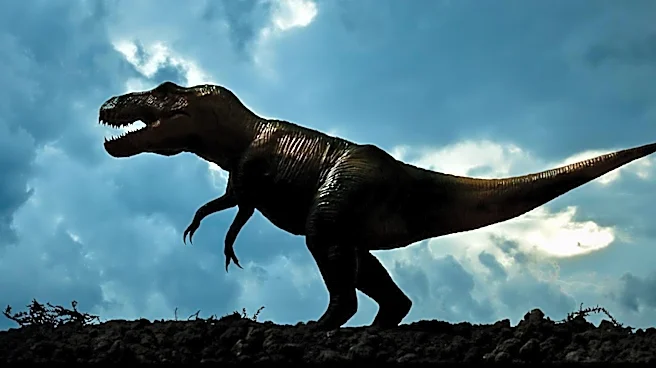
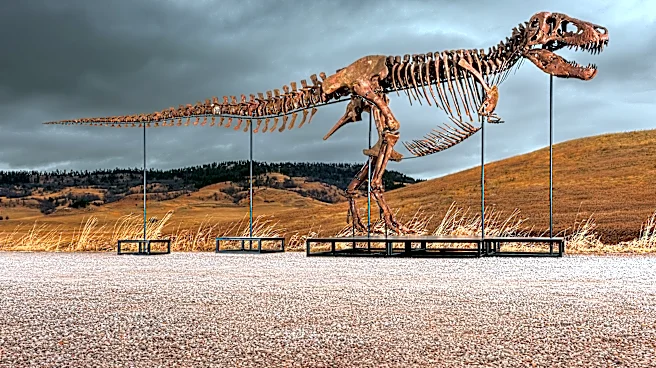
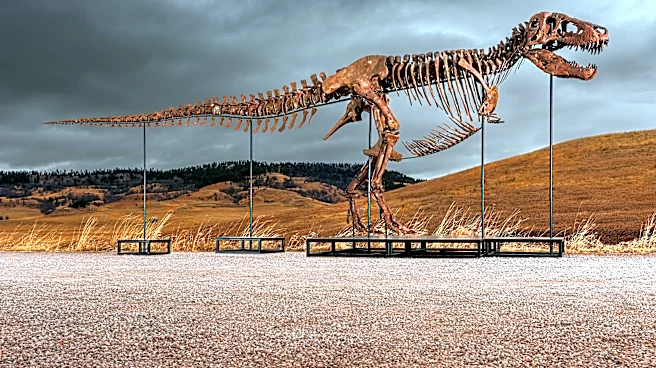
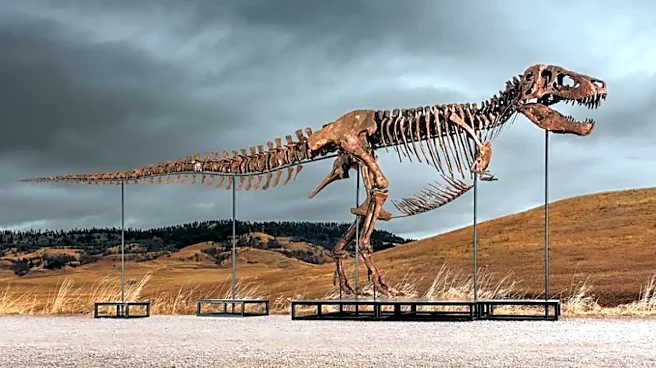
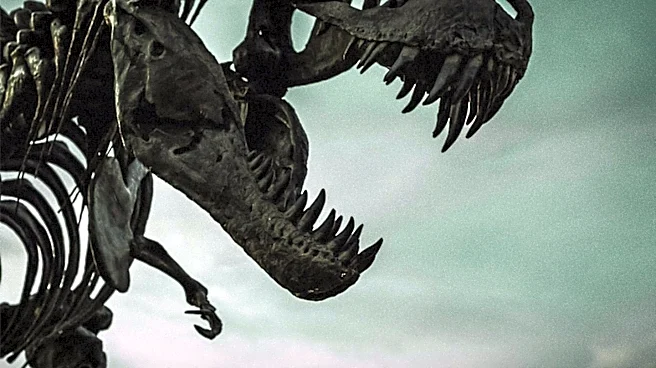
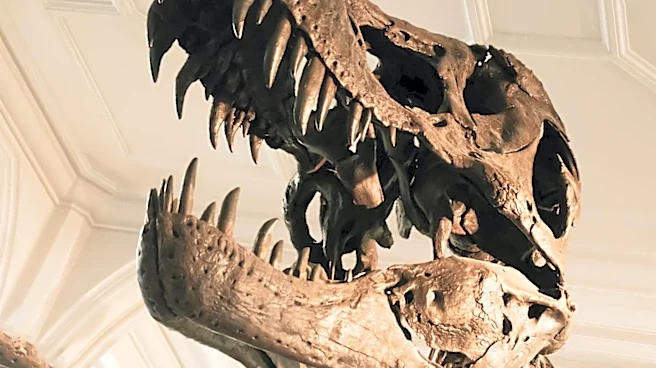
A Tyrannosaurus rex fossil, nicknamed 'Gus', has been sold for a record $50.1 million at a Sotheby's auction. This sale surpasses the previous record held by another T. rex skeleton, 'Stan', which sold for nearly $32 million in 2020. 'Gus', a 67-million-year-old
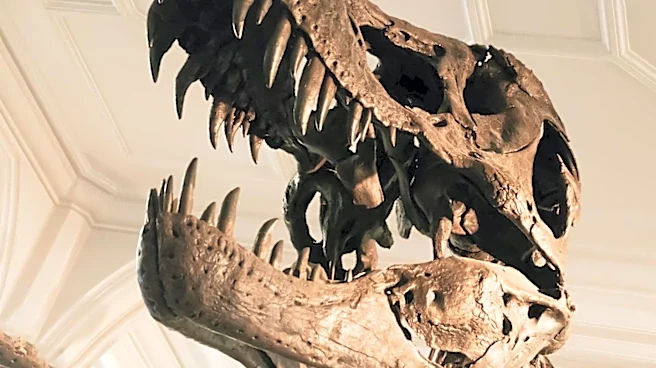
fossil, is now the most expensive set of dinosaur bones ever auctioned. The fossil was discovered in 2021 on a ranch in South Dakota and is about 63% complete, featuring an exceptionally preserved skull and other rare bones. The auction saw intense bidding, with a mystery bidder ultimately securing the fossil. The Society of Vertebrate Paleontology has expressed a desire for 'Gus' to be displayed publicly in museums for educational and research purposes.
Why It's Important?
The sale of 'Gus' highlights the growing market for dinosaur fossils, which are increasingly seen as valuable collectibles. This trend raises concerns among scientists who argue that such significant fossils should be accessible for public education and scientific research rather than private ownership. The high price tag reflects the fossil's rarity and completeness, which are crucial for paleontological studies. The sale also underscores the commercial potential of natural history artifacts, which can attract significant investment. However, it also poses ethical questions about the privatization of scientific resources and the potential loss of public access to important educational materials.
What's Next?
The future of 'Gus' remains uncertain as the identity and intentions of the mystery bidder are unknown. If the fossil is placed in a private collection, it may limit scientific study and public viewing opportunities. Conversely, if the buyer decides to loan 'Gus' to a museum, it could enhance public engagement with paleontology and support ongoing research. The Society of Vertebrate Paleontology and other advocacy groups may continue to push for policies that encourage the public display of significant fossils. The outcome of this sale could influence future auctions and the handling of similar artifacts.
Beyond the Headlines
The sale of 'Gus' raises broader questions about the commercialization of natural history and its impact on scientific research. As fossils become high-value auction items, there is a risk that they may be treated more as luxury goods than as scientific treasures. This trend could lead to increased competition between private collectors and public institutions, potentially driving up prices and making it more difficult for museums to acquire important specimens. The ethical implications of fossil sales also include concerns about the preservation of cultural heritage and the role of private ownership in the stewardship of scientific resources.