





What's Happening?
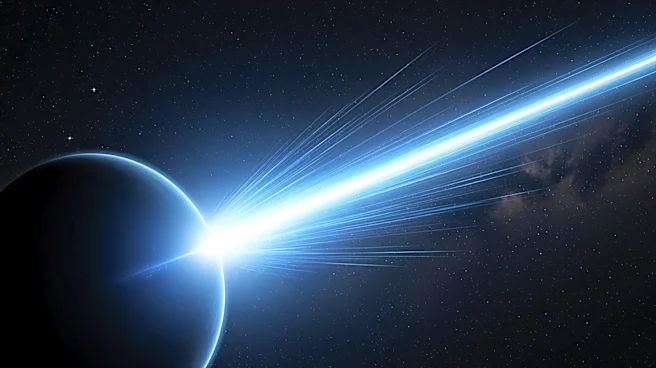
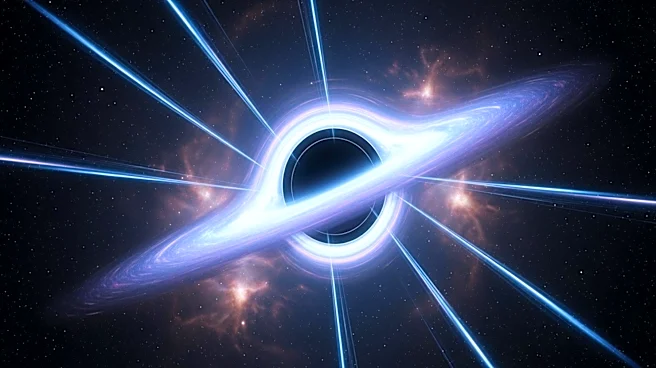
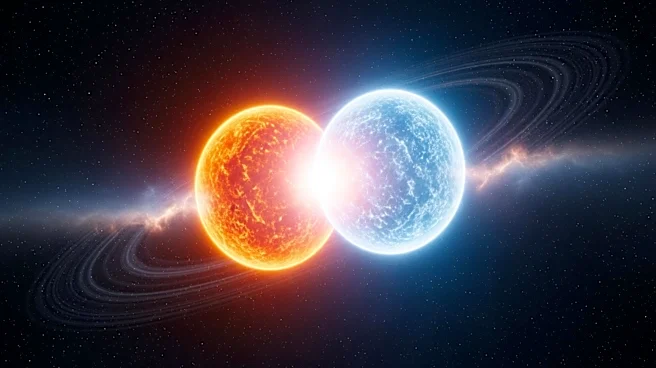
Scientists have achieved a groundbreaking measurement of the power of jets emitted from a black hole, specifically from the Cygnus X-1 binary system located 7,200 light-years away. This system, notable for being the first black hole ever identified, features
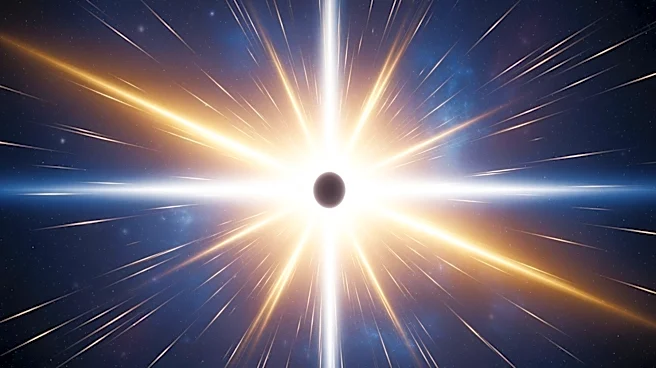
a black hole that draws gases from a companion blue supergiant star. Led by Steve Prabu from the University of Oxford, the international research team utilized 18 years of high-resolution radio imaging from a global telescope network. Their findings, published in Nature Astronomy, reveal that the jets have an instantaneous energy output equivalent to 10,000 suns and travel at approximately 355 million mph, which is half the speed of light. This study marks the first time such measurements have been made directly, as previous estimates could only average jet power over millennia.
Why It's Important?
The ability to measure the power of black hole jets directly provides significant insights into the role these phenomena play in the evolution of galaxies and cosmic structures. The jets, which carry away 10% of the energy released as matter falls into the black hole, contribute to large-scale shocks and turbulence in space. Understanding these processes is crucial for astrophysics, as it helps scientists comprehend how black holes influence their surroundings and the broader universe. The findings could lead to advancements in the study of cosmic phenomena and improve models of galaxy formation and evolution.
What's Next?
Steve Prabu and his team plan to apply the innovative techniques used in this study to other black hole systems. This approach promises to yield further revelations about the nature of black holes and their jets. As these methods are refined and applied to additional systems, the scientific community can expect to gain a deeper understanding of the complex interactions between black holes and their environments, potentially leading to new discoveries in astrophysics.