


What's Happening?
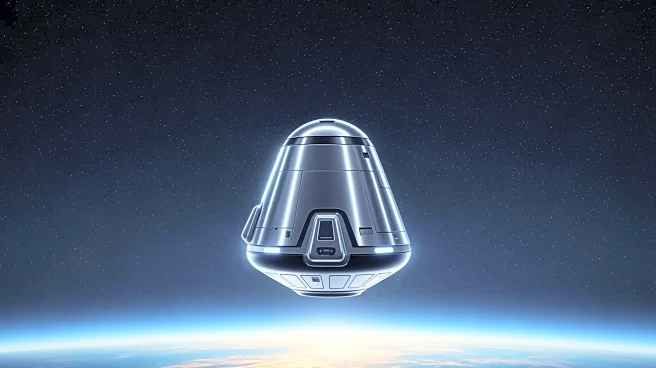
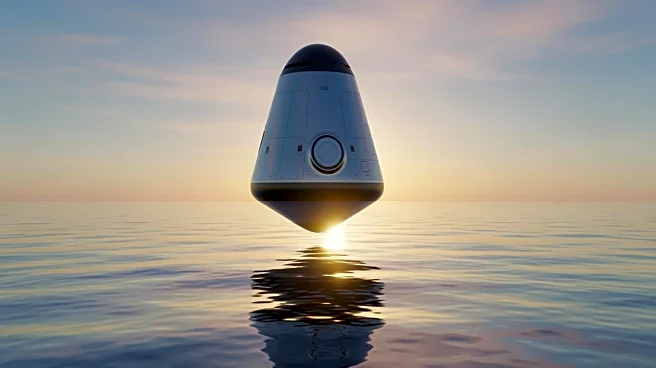
A SpaceX Dragon spacecraft has successfully returned to Earth, carrying several thousand pounds of scientific experiments and laboratory hardware from the International Space Station (ISS). The spacecraft completed a six-month mission at the ISS and splashed
down in the Pacific Ocean off the coast of California. The Dragon had been docked at the ISS since August 2025 and was undocked from the Harmony module before its return. The Expedition 74 crew is now preparing for the departure of two more cargo spaceships in March, which will complete their resupply missions. The Japanese HTV-X1 and Northrop Grumman’s Cygnus XL are scheduled for release, with HTV-X1 conducting scientific experiments in orbit before a safe reentry, and Cygnus XL set for a fiery disposal in the atmosphere.
Why It's Important?
The return of the Dragon spacecraft marks a significant milestone in ongoing space research and international collaboration. The retrieval of scientific experiments and hardware is crucial for advancing space biology and technology research. The successful completion of this mission demonstrates the reliability of commercial spaceflight partnerships, particularly between NASA and SpaceX, in supporting the ISS. The upcoming departures of HTV-X1 and Cygnus XL highlight the continuous cycle of resupply and research missions that sustain the ISS's operations. These missions are vital for maintaining the ISS as a hub for international scientific research and technological development.
What's Next?
Following the Dragon's return, the focus shifts to the upcoming cargo missions. The HTV-X1 will conduct scientific experiments in orbit and test new technologies before its reentry. The Cygnus XL will be released for disposal, marking the end of its mission. These activities are part of a broader schedule of resupply and research missions that ensure the ISS remains operational and productive. The ongoing collaboration between international space agencies and commercial partners will continue to play a critical role in the success of these missions.