





What's Happening?
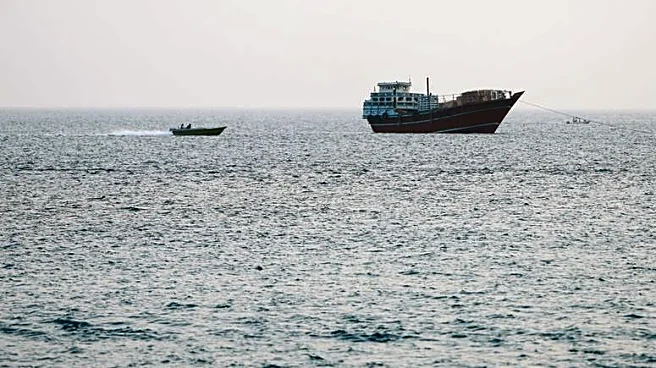
Recent attacks on commercial tankers in the Strait of Hormuz have led to a significant slowdown in Gulf oil exports, according to satellite imagery reviewed by Bloomberg. This disruption has raised fresh concerns over the global crude supply, as the Strait of Hormuz is a critical
energy transit route. Saudi Arabia's oil loadings from its Persian Gulf terminals have decreased sharply, with satellite images showing only one tanker at the kingdom's main Gulf export facilities. The slowdown follows the collapse of an interim peace agreement between Iran and the United States, leading to intensified attacks on commercial vessels by Iran. The International Maritime Organization has issued a warning about the dangerous conditions in the Strait, marking one of its strongest assessments since hostilities resumed. Iraq, heavily reliant on its Basra Oil Terminal, faces additional production cuts due to tanker shortages, while the United Arab Emirates and Kuwait continue to load cargoes despite the risks.
Why It's Important?
The disruption in Gulf oil exports due to the renewed attacks in the Strait of Hormuz has significant implications for global oil markets. The Strait is one of the world's most important energy transit routes, and any instability there can lead to fluctuations in oil prices, affecting economies worldwide. Saudi Arabia, while better positioned to divert exports to the Red Sea, still faces challenges in maintaining its export levels. Iraq's reliance on a single terminal for exports makes it particularly vulnerable to these disruptions, potentially leading to economic strain. The situation underscores the geopolitical tensions in the region and their impact on global energy security. As tanker availability tightens and security risks increase, oil producers in the Gulf face mounting pressure, which could lead to further volatility in oil markets.
What's Next?
The ongoing conflict and security threats in the Strait of Hormuz suggest that oil export disruptions may continue, potentially leading to further production cuts and increased oil prices. Gulf countries may need to explore alternative export routes or increase security measures to mitigate risks. The international community, particularly countries reliant on Gulf oil, may seek diplomatic solutions to stabilize the region and ensure the safe passage of oil shipments. Additionally, the use of 'dark' shipping, where tankers operate without transmitting identification signals, may increase as operators attempt to avoid security threats, complicating efforts to monitor and manage oil exports.