



What's Happening?
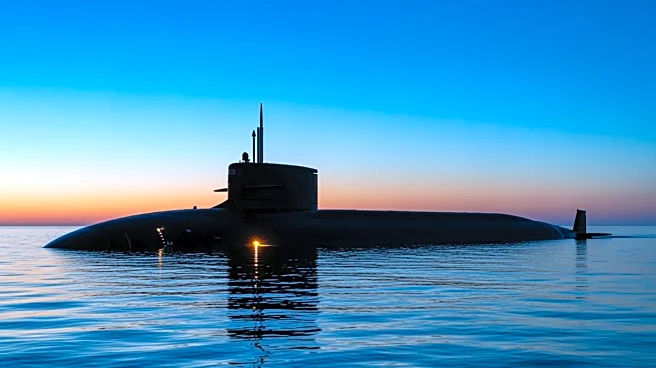
North Korea has revealed its first nuclear-powered ballistic missile submarine (SSBN), marking a significant technological advancement for the Korean People's Navy. The submarine, showcased during a state media broadcast with leader Kim Jong-Un, is reported
to be over 8,000 tonnes in displacement. This development represents a departure from the conventionally powered submarines previously operated by North Korea. The submarine is equipped with strategic missile capabilities, potentially including nuclear-capable submarine-launched ballistic missiles (SLBMs). The design appears to draw inspiration from the South Korean KSS-III class, although it features unique elements such as sail-mounted missile silos. The submarine is estimated to carry up to 10 SLBMs and is equipped with six nose-mounted torpedo tubes.
Why It's Important?
The unveiling of this nuclear-powered submarine underscores North Korea's ongoing efforts to modernize its military capabilities, particularly its naval forces. This development could enhance North Korea's strategic deterrence by providing a second-strike capability, which is crucial for maintaining a credible nuclear deterrent. The introduction of such advanced technology may alter the regional security dynamics, prompting neighboring countries and the international community to reassess their security strategies. The potential deployment of nuclear-capable SLBMs on this submarine could increase tensions in the region, particularly with South Korea and Japan, and may lead to further diplomatic and military responses from the United States and its allies.
What's Next?
The international community is likely to closely monitor North Korea's naval advancements and the potential deployment of this new submarine. There may be increased diplomatic efforts to address the implications of North Korea's enhanced military capabilities. Additionally, regional powers may consider bolstering their own defense systems in response to this development. The United States and its allies could engage in strategic dialogues to ensure regional stability and prevent escalation. Further analysis and intelligence gathering will be essential to understand the full capabilities and intentions behind North Korea's latest military advancements.