
What's Happening?
UNICEF is facing significant challenges in providing essential educational supplies to children in Gaza, where makeshift schools are struggling to offer basic education. According to a UNICEF spokesman,
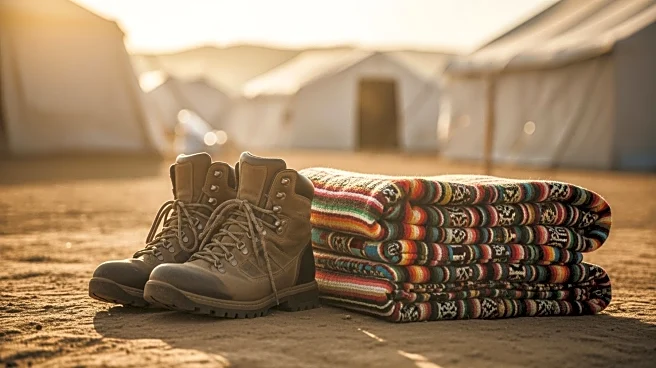
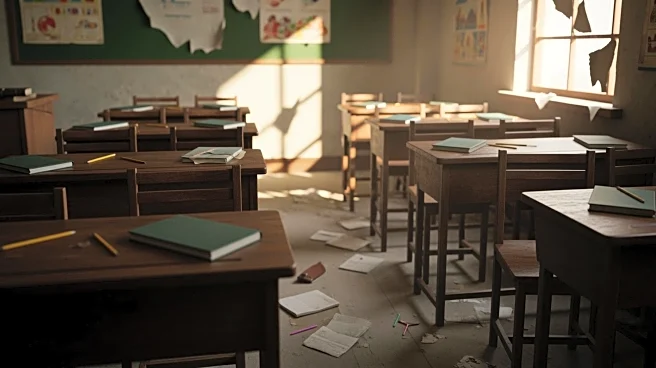
Jonathan Crickx, critical supplies such as paper, notebooks, and mental health kits have not been allowed into the Gaza Strip. The makeshift schools, set up in tents, are only able to teach basic subjects like Arabic, English, mathematics, and science. The situation arises after more than 97% of schools in Gaza were damaged or destroyed during the recent conflict. The Israeli Defense Forces have claimed that Hamas uses civilian infrastructure, including schools, for operations, though evidence has been sparse. The makeshift schools are a temporary solution, providing a semblance of normalcy and routine for children who have been out of formal education for nearly two years.
Why It's Important?
The situation in Gaza highlights the ongoing humanitarian crisis affecting children's education in conflict zones. The lack of educational infrastructure and supplies not only disrupts learning but also impacts the psychological well-being of children who have already experienced significant trauma. The inability to provide a full curriculum limits future opportunities for these children, potentially affecting their long-term development and prospects. The international community's response, or lack thereof, to such crises can influence global perceptions of humanitarian priorities and the effectiveness of international aid organizations like UNICEF.
What's Next?
The continuation of makeshift schooling in Gaza depends heavily on the ability to secure and deliver necessary supplies. International diplomatic efforts may be required to negotiate the entry of educational materials into the region. Additionally, the rebuilding of permanent educational facilities will be crucial for long-term educational stability. Stakeholders, including international organizations and governments, may need to increase pressure on parties involved in the conflict to allow humanitarian aid to reach those in need.