








What's Happening?
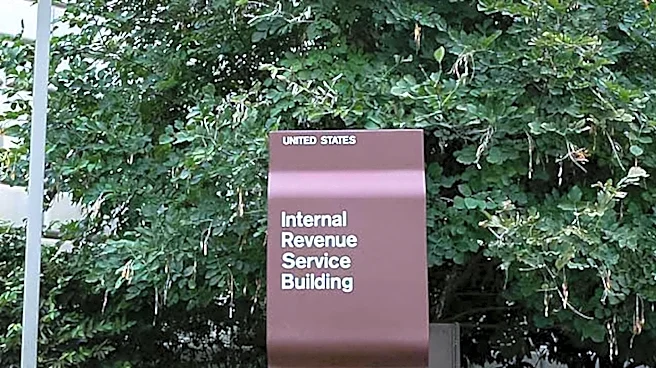
A judge has dismissed a proposed settlement in the case of Trump v. IRS, citing issues with the administration's interpretation of executive authority. The case involved a dispute over tax-related matters, and the judge's decision reflects skepticism
towards the administration's legal arguments regarding the unitary executive theory. This legal theory posits that the president holds control over the entire executive branch, a stance that has been contentious in various legal and political circles. The rejection of the settlement indicates ongoing legal challenges for President Trump and his administration, particularly in how executive power is exercised and interpreted in legal contexts.
Why It's Important?
The judge's decision to reject the settlement in Trump v. IRS underscores the ongoing debate over the limits of executive power in the United States. This case highlights the judiciary's role in checking executive authority, which is a fundamental aspect of the U.S. system of checks and balances. The outcome of this case could have significant implications for how executive power is defined and limited, potentially affecting future administrations. Legal scholars and political analysts will likely scrutinize this decision as it may influence future legal interpretations of executive authority, impacting how presidents can interact with federal agencies like the IRS.
What's Next?
Following the judge's rejection of the settlement, the case may proceed to further litigation unless a new agreement is reached. This could involve additional court hearings and legal arguments, potentially drawing more public and media attention. The administration may need to reassess its legal strategies and consider alternative approaches to resolving the dispute. Additionally, this case could prompt legislative discussions about clarifying the scope of executive power, potentially leading to new laws or amendments aimed at defining the boundaries of presidential authority.
Beyond the Headlines
The rejection of the settlement in Trump v. IRS may also have broader implications for the legal community and public perception of executive power. It raises questions about the balance of power between the branches of government and the role of the judiciary in interpreting constitutional principles. This case could influence public discourse on the appropriate limits of presidential authority, potentially affecting voter attitudes and political campaigns. Furthermore, it may inspire legal reforms or academic debates on the unitary executive theory and its application in modern governance.