

What's Happening?
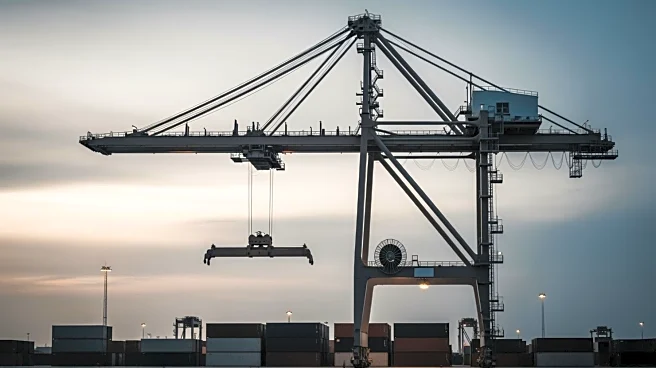
Maersk has announced a temporary halt to its sailings through the Red Sea for two of its routes, citing unforeseen constraints and regional security concerns. The company has decided to reroute some of its upcoming sailings on the ME11 and MECL services
from the Suez Canal to the Cape of Good Hope. This decision affects routes connecting Saudi Arabia and the Middle East to the U.S. East Coast and the Mediterranean. Maersk emphasized that the return to the Red Sea routes would depend on regional stability and security assurances. The company is coordinating with security partners and has informed customers to adjust their supply chains accordingly.
Why It's Important?
The temporary suspension of Maersk's Red Sea routes highlights the ongoing security challenges in the region, which can disrupt global shipping and supply chains. The decision underscores the importance of secure maritime routes for international trade, particularly through strategic chokepoints like the Suez Canal. The rerouting of ships to the Cape of Good Hope could lead to longer transit times and increased shipping costs, affecting global trade dynamics. The situation also reflects broader geopolitical tensions in the Middle East, with potential implications for regional stability and international maritime operations.
What's Next?
Maersk will continue to monitor the security situation in the Red Sea and coordinate with security partners to assess the feasibility of resuming its routes. The company has indicated that naval assistance will be a key factor in its decision-making process. Customers will receive updated transport plans to mitigate the impact on their supply chains. The Suez Canal Authority and regional stakeholders will likely work to address security concerns and encourage the resumption of normal shipping operations. The international community may also engage in diplomatic efforts to stabilize the region and ensure the safety of maritime routes.