


What's Happening?
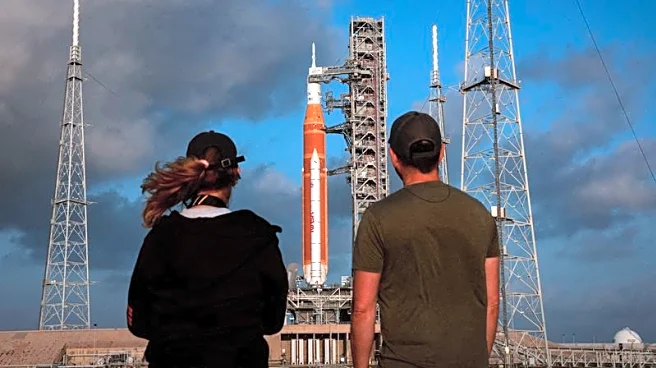
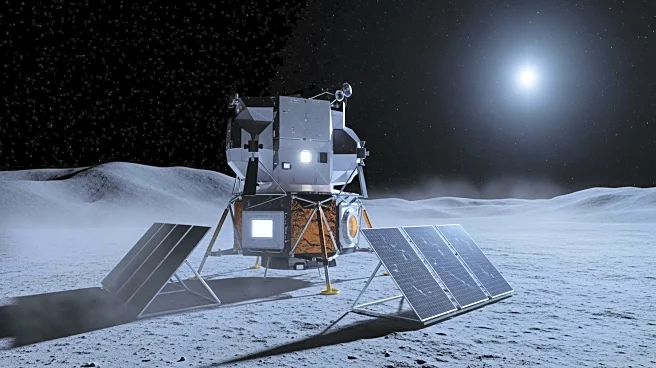
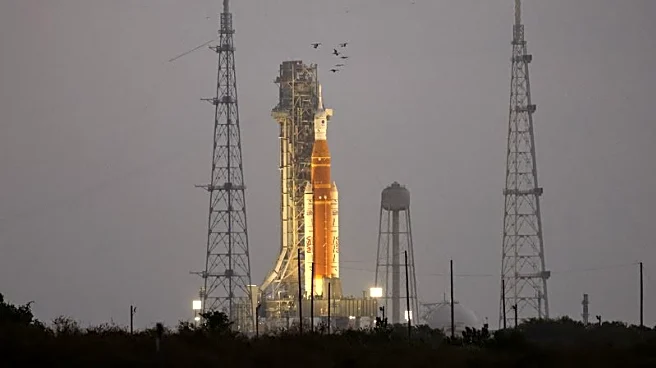
NASA has announced a strategic shift in its Artemis program, focusing on establishing a long-term lunar base by the 2030s. This move marks a departure from the traditional space race model, emphasizing sustained operations and infrastructure development
on the Moon. The updated plan includes investing billions in habitats, power systems, and surface infrastructure to support ongoing human activity. The Artemis program aims to create a reliable system for humans to live and work on the Moon, with the ultimate goal of preparing for future Mars missions. The timeline includes an intermediate mission in 2027 to test docking and life-support systems, with the first landing near the lunar south pole targeted for 2028.
Why It's Important?
The establishment of a lunar base represents a significant shift in space exploration strategy, moving from one-off missions to sustained operations. This approach not only advances technological development but also has economic and strategic implications. The Artemis program supports job creation and industry growth in the U.S. and among international partners. It also positions the U.S. to influence the future of space activity, as sustained presence on the Moon will shape practical expectations for living and working in space. Technologies developed for lunar activity, such as life-support systems and energy storage, have potential applications on Earth, impacting sectors like medicine and disaster response.
What's Next?
NASA's focus on building a lunar base involves coordinating with commercial partners like SpaceX and Blue Origin, integrating their lunar landers into the mission architecture. The 2027 test mission will practice docking in low Earth orbit, emphasizing a collaborative approach that spreads risk and lowers costs. This method requires reliable cooperation among multiple players, highlighting the importance of public-private partnerships in space exploration. As the program progresses, the U.S. aims to establish a foothold on the Moon, redefining humanity's relationship with space and potentially integrating lunar infrastructure into Earth's technological networks.