


What's Happening?
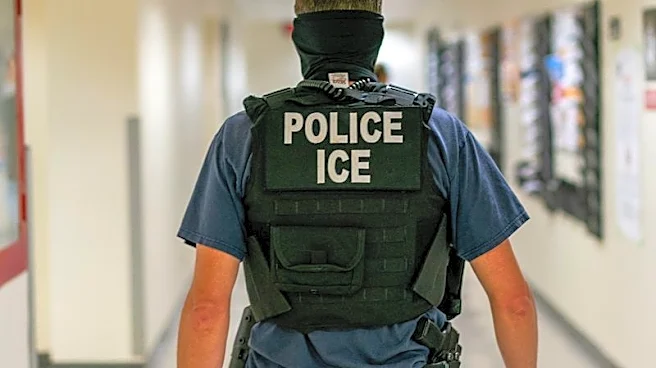
Immigration and Customs Enforcement (ICE) has admitted to investigating David Streever, a critic of the agency, based on his constitutionally protected speech. This admission comes in response to a First Amendment lawsuit filed by Streever. The incident
began on January 26, when Streever sent an email to Todd Lyons, then the acting ICE director, criticizing him following the fatal shooting of Minneapolis protester Alex Pretti by DHS agents. Streever's email, while harsh, did not contain any threats of violence. Despite this, Brent Goodwin, assistant director for investigations at ICE's Office of Professional Responsibility (OPR), claimed the email had 'potential threatening undertones' and 'potentially present[ed] a safety concern,' leading to an ICE investigation. On June 23, two DHS agents left a 'WARNING NOTICE' at Streever's home, citing federal statutes related to threats against federal officials and revealing 'restricted personal information,' neither of which Streever had violated. DHS agents also attempted to intercept Streever at John F. Kennedy International Airport and contact him at his hotel.
Why It's Important?
This case is significant as it directly challenges the boundaries of free speech and government oversight in the United States. ICE's admission that it investigated a citizen for expressing critical views, even if those views were strongly worded, raises serious concerns about potential government overreach and the chilling effect on dissent. The First Amendment protects citizens' right to criticize government officials, and an investigation based on such criticism could be seen as an attempt to intimidate and silence opposition. This incident could deter others from speaking out against government actions, thereby undermining democratic principles. The use of a 'WARNING NOTICE' citing federal laws that were not violated further suggests an intent to suppress speech rather than address a genuine threat. The Wall Street Journal's report about ICE's 'round-the-clock digital dragnet' tracking online speech indicates a broader pattern of surveillance that could impact civil liberties and the public's trust in government agencies.
What's Next?
The lawsuit filed by David Streever, with the support of the Foundation for Individual Rights and Expression, will proceed, aiming to establish a legal precedent against government agencies investigating citizens for protected speech. The government's lawyers are seeking dismissal of Streever's lawsuit, arguing that while his email expressed disagreement, it did not warrant legal action. The outcome of this case could significantly impact how federal agencies interact with public criticism and define the scope of their investigative powers. It may also lead to increased scrutiny of ICE's surveillance practices and potentially prompt legislative action to safeguard First Amendment rights. Civil liberties organizations will likely monitor the case closely, using it to advocate for stronger protections against government intimidation. The case could also encourage other individuals who believe they have been similarly targeted to come forward, potentially leading to more legal challenges against government agencies.
Beyond the Headlines
This incident transcends a single legal dispute, touching upon the fundamental tension between national security interests and individual freedoms in a democratic society. The Supreme Court's past emphasis on the ability to criticize police conduct as a hallmark of a free nation underscores the gravity of ICE's actions. If government agencies can investigate citizens for expressing critical opinions, it could erode the public's confidence in their right to hold power accountable. This case also highlights the evolving nature of surveillance in the digital age, where online expressions can be easily monitored and potentially misinterpreted by authorities. The 'chilling effect' on speech, where individuals self-censor to avoid potential repercussions, could lead to a less informed and less engaged citizenry, ultimately weakening the democratic process. The ethical implications of an agency using its power to silence critics, rather than address the substance of their concerns, are profound and could have long-term consequences for civil liberties in the U.S.