
What's Happening?
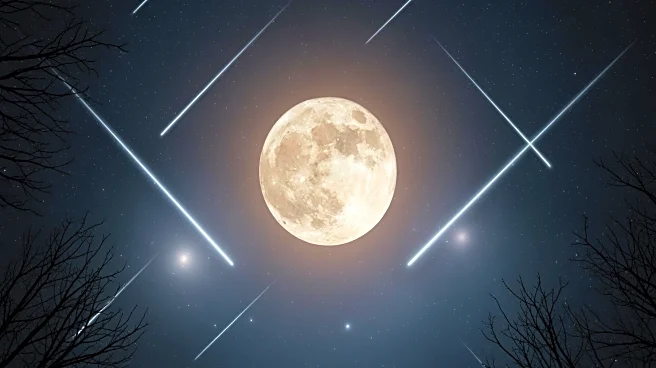
The Quadrantid meteor shower, known for its potential to produce up to 200 meteors per hour, is set to peak overnight. However, this year's display coincides with the full 'Wolf Moon,' which may obscure
all but the brightest meteors. The shower, active from December 26, 2025, to January 16, 2026, reaches its peak in the early hours of January 4. The Quadrantids are named after a now-defunct constellation, Quadrans Muralis, and are best viewed from the Northern Hemisphere. The meteors originate from the debris trail of asteroid 2003 EH1, and the shower's brief peak is due to Earth's perpendicular passage through this trail.
Why It's Important?
The Quadrantid meteor shower is a significant event for astronomers and stargazers, offering a chance to observe a high volume of meteors under optimal conditions. However, the full moon's brightness poses a challenge, potentially reducing visibility to about 10 meteors per hour. This event highlights the interplay between celestial phenomena and natural light conditions, affecting observational opportunities. It also underscores the importance of timing and location in astronomical observations, as the best views are from northern latitudes where the radiant is higher in the sky.